Every Journey Checked Before It Starts, and Watched Until It Ends

Drivers request the journey and inspect the vehicle from their phone, by voice and photo. Fieldmaster.ai checks every licence, permit and vehicle document, plans the route with mandatory breaks, and sends the journey to the approvers its risk requires. Once the vehicle leaves, the same phone tracks the trip until the journey is closed. Deployed on Shell sites and built for OPAL-compliant oil and gas operations.
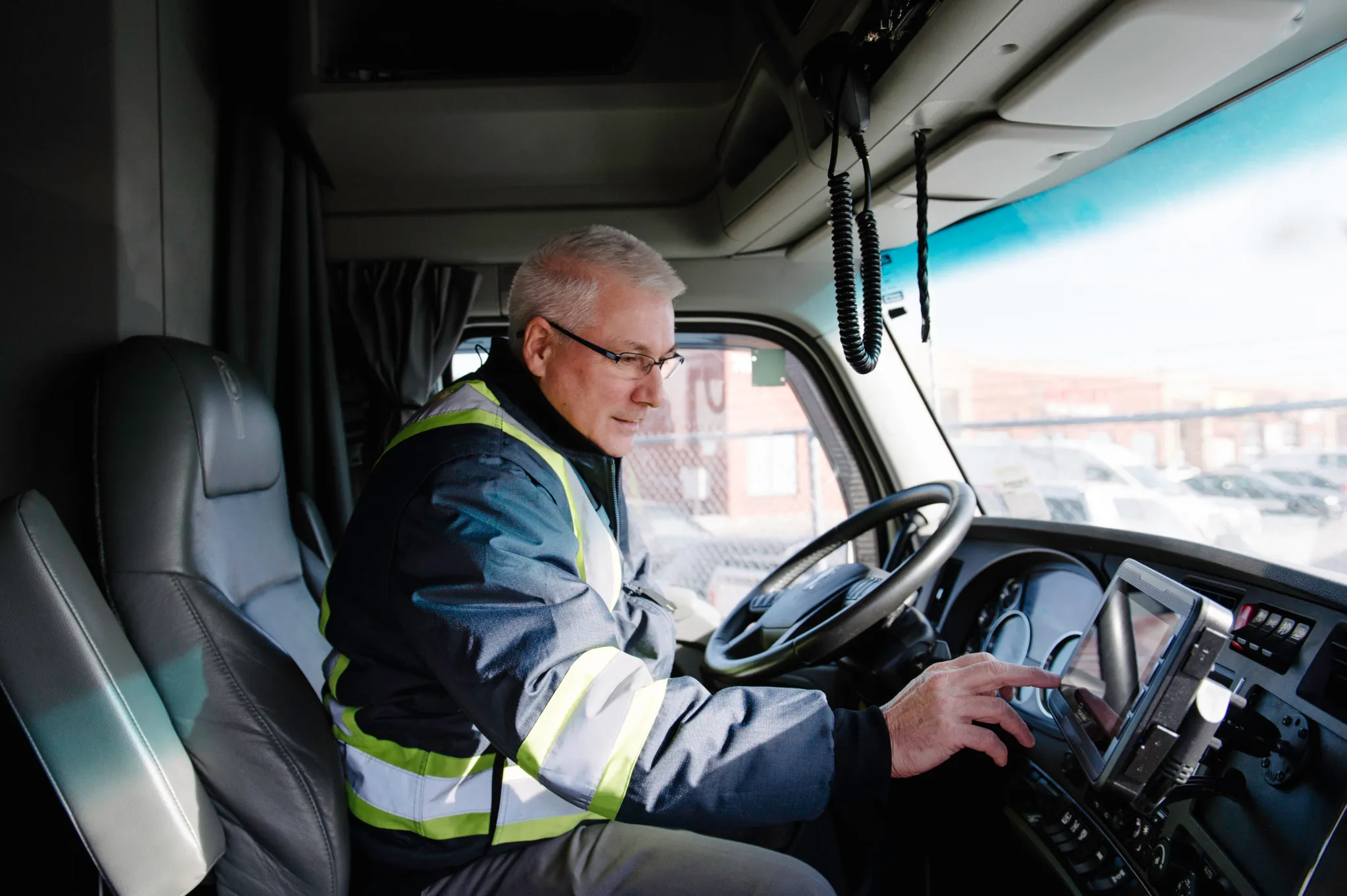
Driver in a reflective safety jacket using a touchscreen device inside a truck cab

The problem

Compliance Shouldn’t Depend on Individuals

In many operations, journeys are approved without checking driver licences, permits or vehicle registration. Expired documents are only found after the journey has started, and vehicle inspections happen without a standard checklist, photo evidence or proof of which vehicle was inspected.

Higher-risk journeys aren’t consistently escalated, driving time limits and mandatory breaks aren’t enforced, and once a vehicle leaves there is little visibility of where it is or whether the plan is being followed. When an audit comes, the records are scattered across formats, or were never kept.

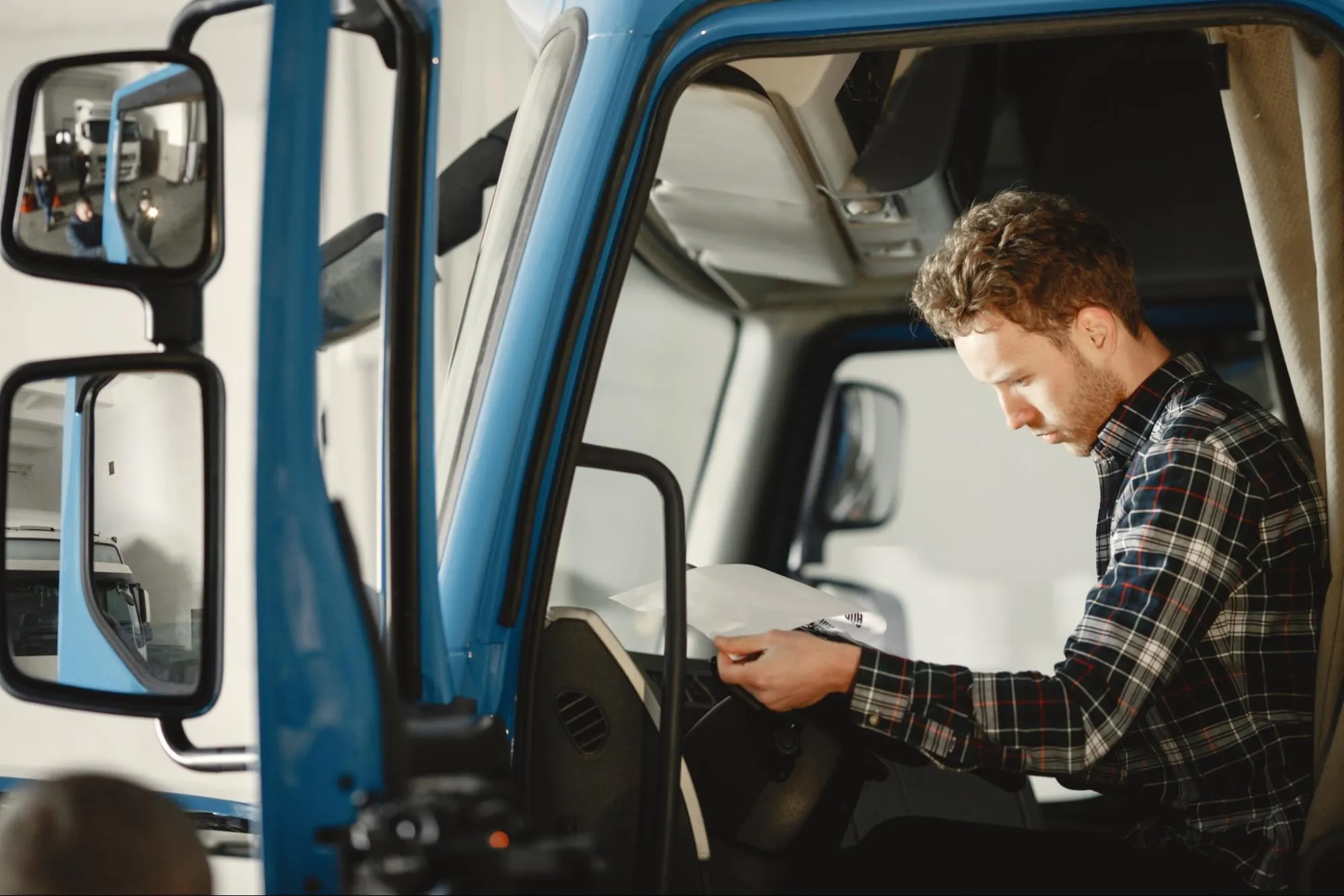
Driver sitting in a truck cab reading a paper checklist

How it works

From Request to Closure, Every Stage Controlled

Each journey moves through defined stages, and the system checks every one before the next can begin.

  1. Request and inspect

    The driver describes the journey by voice, photographs the number plate and completes the pre-trip checklist.

  2. Validate

    Licences, permits, vehicle documents and inspection answers are checked automatically on submission.

  3. Plan

    The route is planned with breaks added automatically, and no stretch runs longer than two hours.

  4. Approve

    Risk is assessed, including the weather along the route, and the journey goes to every approver it requires.

  5. Track

    The driver’s phone tracks the trip, even offline, and flags short breaks, speeding and route deviations.

  6. Close

    The Journey Manager reviews planned against actual in the close-out report and closes the journey.

Mobile app

The Journey Runs From the Driver’s Phone

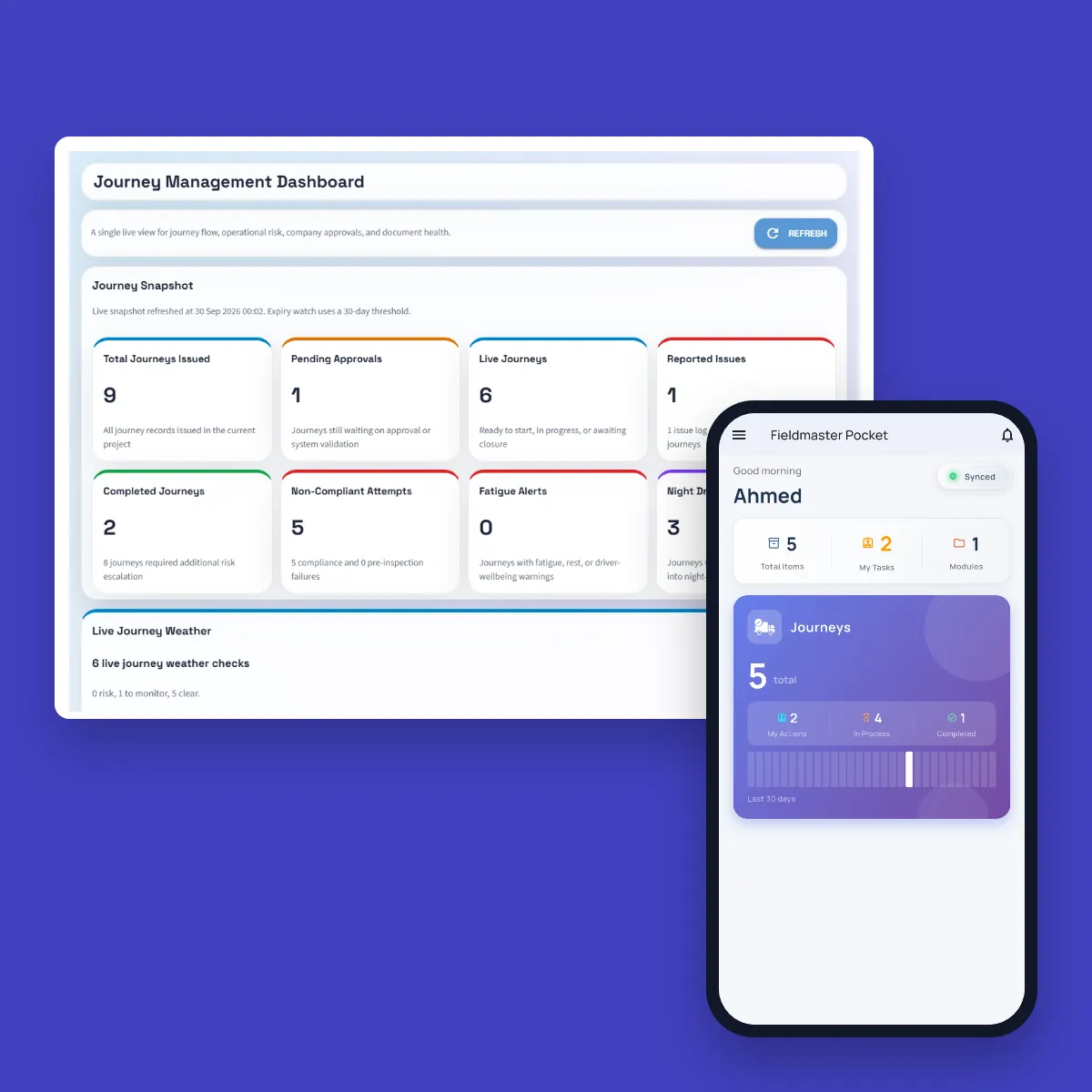
Drivers raise the journey, inspect the vehicle and start the trip in the Fieldmaster Pocket app, by voice and photo. The same phone records the route while they drive, so no in-vehicle hardware is needed.

Journey Managers see each request, approval and live journey on the dashboard as soon as the driver saves it. The app keeps recording without signal and works in each driver’s own language.

Journey Management dashboard with journeys issued, pending approvals, live journeys and alerts, next to the Fieldmaster Pocket home screen of a driver

Proof

Risks Caught Before the Engine Starts

Numbers from a contractor in the GCC that runs every journey through Fieldmaster.

  • 600+

    Journeys a month

    Each one validated, approved and tracked from departure to arrival.

  • 79

    Non-compliant journeys stopped

    In one project: 62 failed the driver and vehicle document check and 17 failed the pre-trip inspection, before anyone set off.

  • 148

    Journeys escalated for risk sign-off

    In the same project, 148 of 197 completed journeys needed extra approval, 50 of them for night driving.

Outcomes

What Changes for Your Operation

  • Non-compliant journeys stop at submission

    Expired documents and failed checks stop the journey. An override needs the Journey Manager’s written reason, recorded under their name.

  • Inspections you can prove

    The plate photo must match the vehicle on the request, and every check comes with photos, a signature, time and location.

  • The right approvers, every time

    Night driving, border crossings, bad weather and security risks add approval levels automatically.

  • Visibility without phone calls

    Managers see where every journey is and which ones broke a rule, without calling the driver.

  • One standard for every fleet

    Company and subcontractor drivers and vehicles are held to the same rules.

  • Audit-ready records

    Every journey closes with a close-out report, and a Journey Movement Authorization can be printed at any time.

Why field focus matters

What Happens When Drivers Are Left Out of the Journey Plan

When the journey plan is a form in the office and the driver’s part is a phone call, you sign off on risks you can’t see.

  • A white truck cab stopped beside a closed grey corrugated metal sliding gate with barbed wire on the wall behind it.

    Approving drivers you haven’t checked

    You approve the journey on the driver’s word, and an expired licence or permit turns up at a checkpoint, or after an incident.

  • A worker in an orange high-visibility vest writing on a sheet of paper at an outdoor site

    Inspections you can’t defend in an audit

    Pre-trip checks are ticked on paper with no photo, so you can’t prove which vehicle was checked, or that anyone looked.

  • A box truck driving away along a long, straight highway through dry hills with few other vehicles in sight.

    Fatigue rules you can’t enforce

    The plan sets rest breaks, but nothing reminds drivers on the road, and you can’t tell whether they stopped until something goes wrong.

  • A white 4x4 van driving alone along a narrow road through empty desert with rocky hills ahead.

    Hours spent phoning drivers

    Once a vehicle leaves, you track it by calling the driver, and a late arrival is the first sign of trouble.