Every Asset Serviced on Schedule, Every Job Closed With Proof

Plan preventive maintenance for the chillers, pumps and panels in your buildings and the pumps, valves and meters across your field network. Reported faults become jobs on the same system, and every job closes with the asset’s status, photos, readings and the parts used.


Technician in orange coveralls, safety glasses and ear defenders checking a tablet next to industrial machinery

The problem

Why Maintenance Slips Between Planned and Done

The preventive maintenance plan lives in a spreadsheet, so services are missed when the person who keeps it is busy or on leave. Faults are reported by phone, email and chat, and requests slip between the helpdesk, supervisors and technicians.

Technicians finish jobs without a record of what they found, what they replaced or which parts they used. When an asset fails, nobody can show when it was last serviced. And across many buildings and remote sites, managers only learn a job is late when someone complains.

Helpdesk agent wearing a headset and typing at a computer in a busy office

How it works

From Service Plan to Signed-Off Job

Planned and reactive work run through the same steps, so every job is tracked the same way.

  1. Plan

    Each asset gets a service frequency, and the timetable lays out the whole year. Preventive tasks are created when they fall due.

  2. Assign

    Planned tasks, reported faults and inspection findings go to technicians’ phones by site, location and workload.

  3. Execute

    Technicians scan the asset, record its status, readings and safety checks, and describe the work by voice.

  4. Review

    Supervisors accept the job or send it back, follow-up work stays open, and managers see what’s late.

Mobile app

Every Job in the Technician’s Pocket

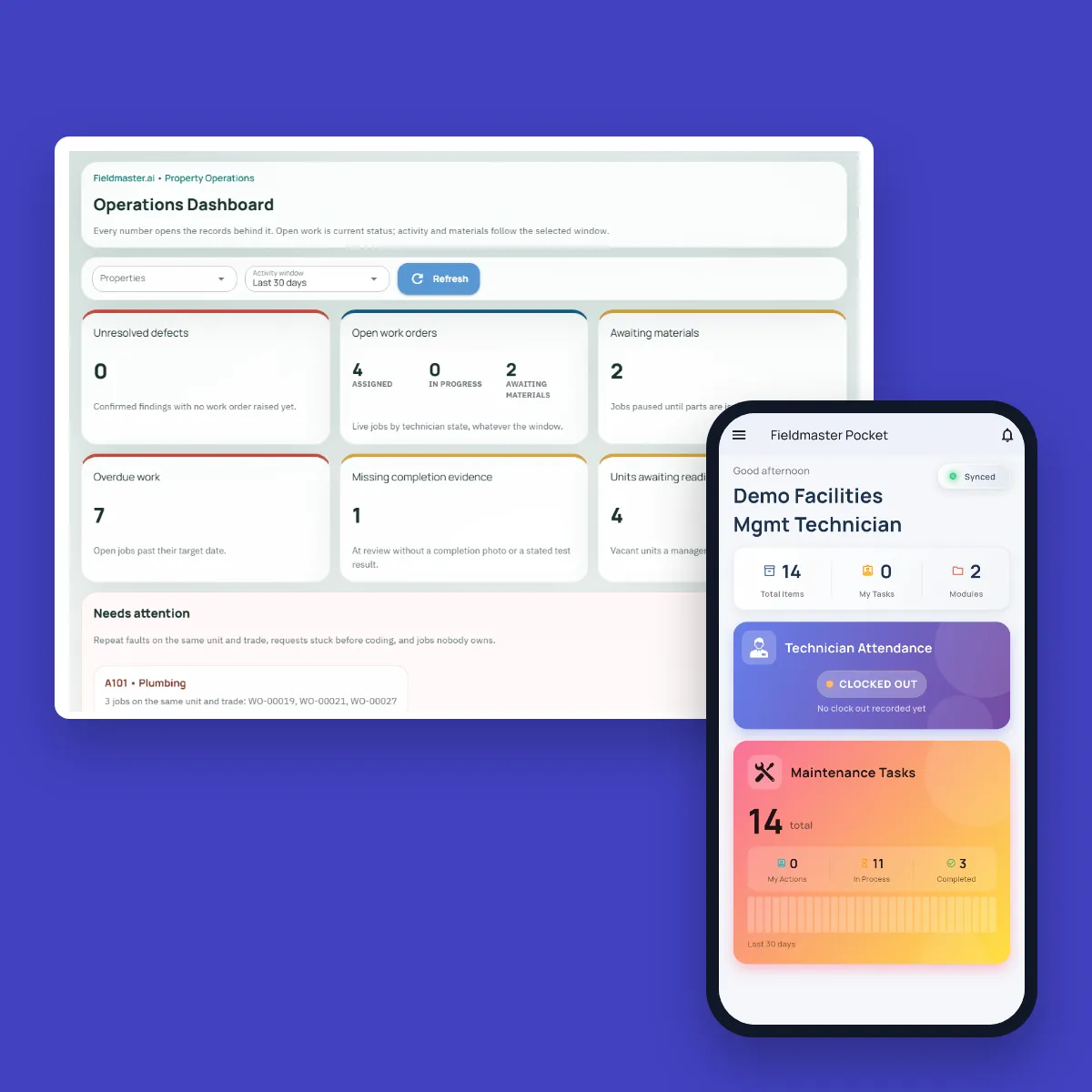
Technicians see their assigned tasks, clock in on site and work each asset from the app: scan it, record its condition, read gauges from a photo and confirm the safety checks. Supervisors and managers see the result on the dashboard as soon as the job is saved.

The app works without signal in plant rooms and basements, and in each technician’s own language.

Maintenance operations dashboard next to the Fieldmaster Pocket home screen of a technician with attendance and maintenance task counts

Track record

Built on a Platform Proven in the Field

Facilities & Asset Maintenance runs on the same Fieldmaster platform that already keeps large asset registers in the GCC on schedule.

  • 15M

    Service visits completed

    Field operations across the GCC and other international markets.

  • 35,000+

    Bins under maintenance

    Inspected on a schedule, with every issue raised as a task automatically.

  • 100,000+

    Meters installed

    Every swap photographed, GPS-stamped and barcode-checked.

Results

What Changes for Your Operation

  • No missed services

    Preventive tasks come from each asset’s schedule, not from someone’s memory or a spreadsheet.

  • A history for every asset

    Every visit is logged against the asset’s ID, with its status, readings, photos and parts, ready for audits and warranty claims.

  • No lost requests

    Complaints and reported faults are logged once and turned into jobs, even when one issue needs several visits or trades.

  • Work you can verify

    Supervisors see the photos, readings and the technician’s own account before they accept a job.

  • Parts accounted for

    Parts and consumables are issued to the job, and what was used or returned is recorded against it.

  • Late work seen early

    Overdue jobs, jobs waiting for parts and repeat faults on the same unit show on the dashboard the same day.

Why field focus matters

What Happens When Technicians Are Left Out

When job sheets are paper and faults arrive by phone, you can’t see what your technicians actually did, and you’re the one who answers for it when an asset fails.

  • A gloved hand filling in a paper checklist on a clipboard outdoors

    No answer when an asset fails

    A chiller trips and the client asks when it was last serviced. All you have is a signed sheet with no readings, photos or findings.

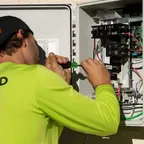
  • A technician in a lime-green work shirt and cap uses a screwdriver on the wiring inside an open electrical box on a wall.

    Material costs you can’t explain

    Parts go from the van into the equipment without being recorded, so stock runs out without warning and costs can’t be charged to the right asset or client.

  • A worn blue water pipe and tap drips a single drop of water above a paint-stained bucket on a dirt floor.

    Duplicate jobs and lost requests

    A leak is reported to the helpdesk, the guard and the supervisor, and you end up sending three technicians, or none.

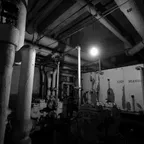
  • A black-and-white view of a dim basement plant room with insulated pipes, valves and a single bare bulb overhead.

    Late work you hear about from tenants

    Jobs in basements and at remote sites are written up days later, if at all, so you only learn a service slipped when someone complains.