Material Management

Inventory Management Software for Stores, Vehicles and Sites

Fieldmaster tracks your stock wherever it actually sits: in the central store, in a site store, in a technician’s van or with the person who signed for it. Staff request items from their phones, goods are issued and transferred by barcode, and every movement records who, when and for which job.

Two colleagues in a warehouse aisle checking stock on a tablet and a clipboard

The problem

Why Stock Disappears Between the Store and the Site

Many stores keep a ledger or a spreadsheet that is updated when someone has time. Material is issued against a phone call, taken to site in a pickup, and never comes back on the books. Serial-numbered items such as meters, tools and spares are tracked from memory.

By the end of the month the count doesn’t match, nobody can say which job used what, and parts are bought again while they sit in another store.

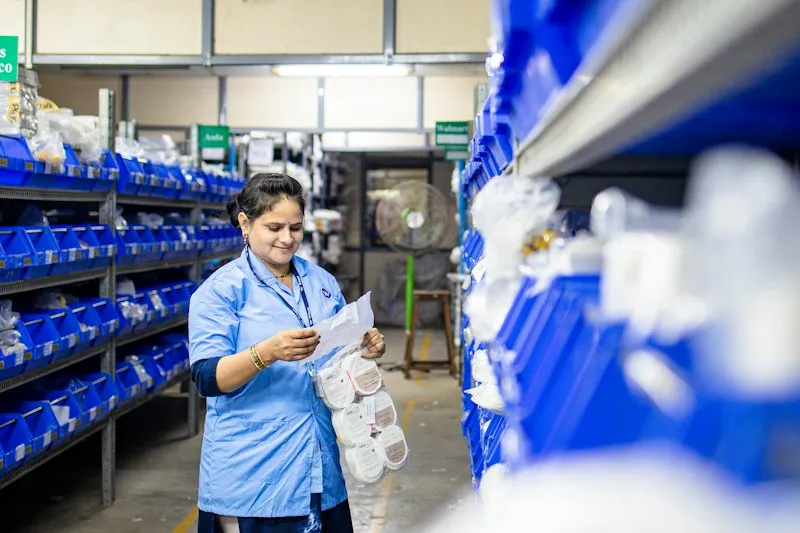
A storeroom worker in a blue uniform checking a paper list against stock on shelves of blue parts bins

How it works

Every Movement Recorded, From Request to Use

Stock changes only through a recorded movement, so the count is right at any moment, not just after a stock take.

  1. Request

    Staff raise a material request from the app, with a photo or a voice note in their own language, and see the stock in each store.

  2. Receive

    Goods are counted, photographed and scanned, and stock posts to the right store as soon as the receipt is saved, by quantity or by serial number.

  3. Issue

    Items are issued to a person, a vehicle or a job, with a photo as proof.

  4. Transfer

    Stock moves between stores, vans and sites with a transfer record, so it is always in one known place.

  5. Return or write off

    Unused items come back to stock, and damaged ones are written off with a reason.

Proof

Proven at Warehouse Scale

Numbers from an operator in the GCC that runs its purchasing and stores on Fieldmaster.

  • 85,000+

    SKUs under management

    Every item tracked across stores, from requisition to issue.

  • 500+

    Purchase orders a month

    Each one traceable from the first request to the final payment.

Results

What Changes for Your Operation

  • Inventory counts you can trust

    Stock updates in every store the moment parts are received, issued or transferred, not at the end of the month.

  • Proof of every part used

    Photo-verified stock issues show which job, vehicle or work order each part went to, and when.

  • No buying what you already have

    Live stock by store shows while people request, so nobody buys what another store already holds.

  • Stock beyond the central store

    See what each store, vehicle and person is holding, not only the main warehouse.

  • Serial numbers followed

    Meters, tools and spares are tracked one by one, from receipt to the person or site holding them.

  • Equipment charged to projects

    Equipment issued to project sites can be charged back to each project every month.

Why field focus matters

What Happens When Stock Leaves the Store Unrecorded

Stores software only helps if the people handling the parts actually use it. When they don’t, stock moves first and the record catches up later, if at all.

  • Stacks of green pipes laid out on a cleared construction site, with excavators working behind them.

    Material that leaves for site off the books

    Material is issued against a phone call and taken to site in a pickup, so it never comes back on the record.

  • A workshop wall with hand tools, planes and chisels hung in neat rows.

    Tools and spares tracked from memory

    Serial-numbered tools, meters and spares sit with whoever last took them, and nobody can say who that was.

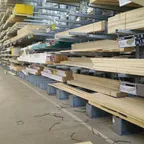
  • Long racks of timber planks in a building supplies store.

    Stock counts that never add up

    Receipts and handovers go on paper or not at all, so losses only show at the stock count, with no way to trace them.

Integrated by design

The Buying Side Comes With Your Stock

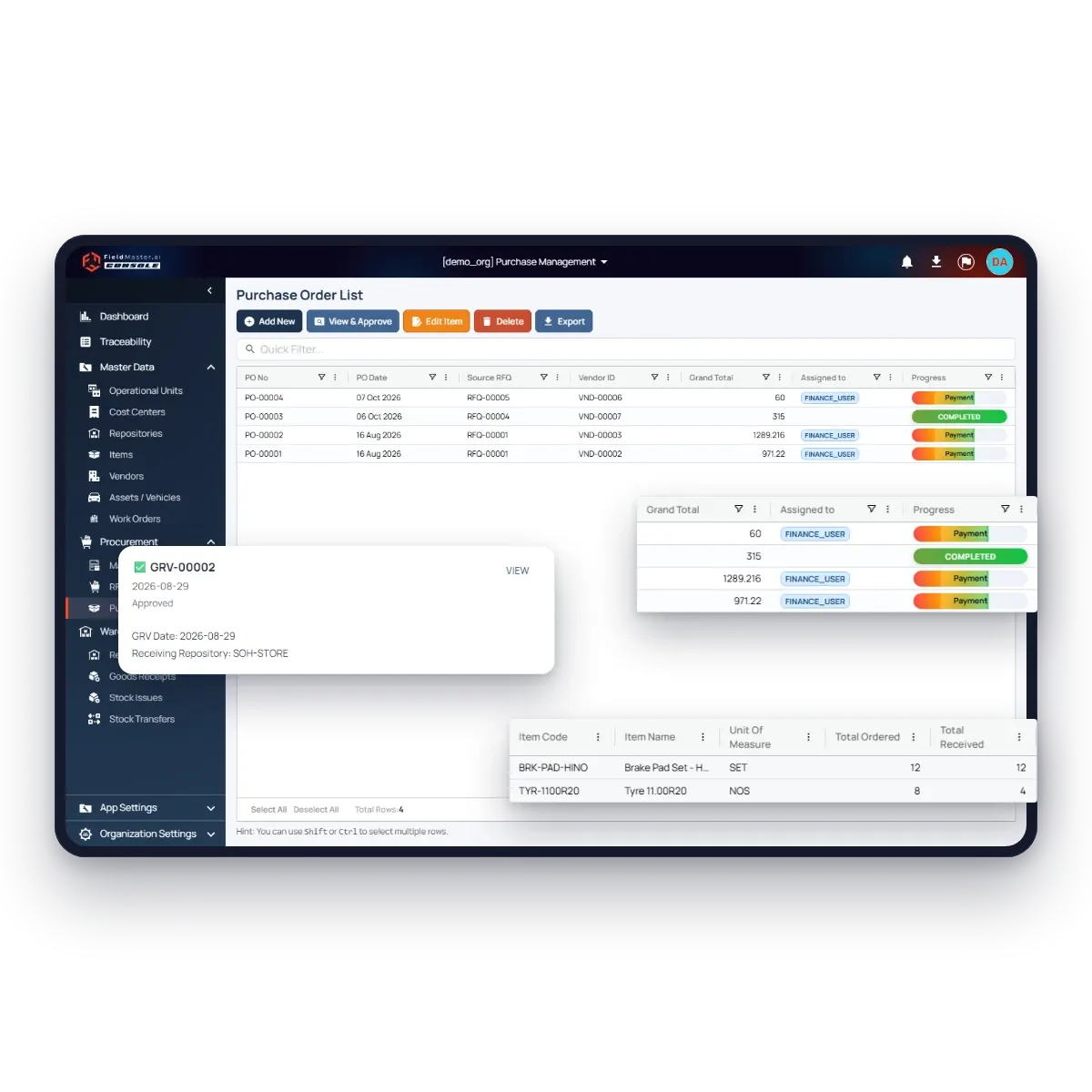
Material Management includes the material request form, so staff ask for items from their phones. When stock has to be bought in, the parts of purchasing your process needs come with it, and every receipt stays tied to what was ordered. There’s no second system to connect.

It runs as a standalone product, so you don’t need an ERP behind it, and if you have one, we can integrate with it however you need. If you also want to run vendor quotes, approval chains and invoice matching on Fieldmaster, Purchase Management adds them to the same record.

Purchase order list in the Fieldmaster.ai web console with each order’s progress, the goods receipt linked to one order and its ordered and received quantities

FAQ

Inventory Management: Common Questions

What is inventory management software?

Software that keeps a running record of the stock you hold, where it is and how it moved: receipts, issues, transfers, returns and write-offs. For contractors and field teams the hard part is stock that leaves the store, so Fieldmaster tracks it in vehicles, at sites and with people too.

Is it for shops and online stores?

No. It is built for operations that use their own stock: contractors, utilities, maintenance teams and workshops. If you sell online or run tills, a retail inventory product will suit you better.

Can it track serial-numbered items?

Yes. Items can be tracked by quantity or by serial number. Serial-numbered items, such as meters or tools, are scanned at every receipt, issue and transfer, so you can see who holds each one.

Do we also need Purchase Management?

Not to start. Material requests are part of Material Management, and when stock has to be bought in, the purchasing steps your process needs are included. Add Purchase Management if you also want vendor quotes, approval chains and invoice matching on Fieldmaster.

Does it work in a store with no signal?

Yes. Receipts, issues and scans are saved on the phone and sync when the connection returns.

Do we need an ERP to use it?

No. Material Management works as a standalone product, with no ERP behind it: item lists load from Excel, and any list exports to Excel. If you already have an ERP, we can build any kind of integration with it, so you can keep it for finance and use Fieldmaster for the store and site work. The choice is yours.

How long does it take to set up?

Your stores, item list and approval rules are set up to match how you work today. Your app is typically live in 0 to 18 working days, depending on how much customization it needs.

Can we ask ChatGPT or Claude about our items, stores and stock movements?

Yes. AI connectors let you use your own LLM, such as ChatGPT or Claude, to ask questions like “Which store issued the most filters this month?” and get the answer and a chart from your latest records. They follow each person’s role, and they are opt-in, not turned on by default.