Gas distributors deal with a particular kind of dispute. A customer says three cylinders arrived when the order was for four. A restaurant says the bulk tank was filled with fewer litres than the invoice shows. An empty cylinder that should have come back to the depot is nowhere to be found.
In most cases, both sides believe they are right, and neither can prove it. The driver remembers the drop. The customer remembers the count. The paper delivery note has a signature, but it doesn’t say which cylinders were delivered or what the meter read.
This post walks through how proof of delivery works when it is captured at the door, by the driver, at the moment of delivery.
Where Delivery Disputes Start
Delivery disputes almost always come from a gap between what was ordered, what left the depot and what the customer actually received. Paper and phone calls can’t close that gap, because they record what someone says happened.
Three things go wrong most often:
- Short deliveries. The quantity on the invoice doesn’t match what reached the customer, and there is no way to check.
- Lost cylinders. Full cylinders go out and empties are meant to come back, but nobody tracks which ones, so cylinders quietly disappear from the pool.
- Quantity disputes on bulk fills. The customer questions the litres delivered, and the only evidence is a handwritten number.
Each of these delays payment, and each costs the business something it can’t recover.
Cylinder Deliveries: Scan Every One at the Door
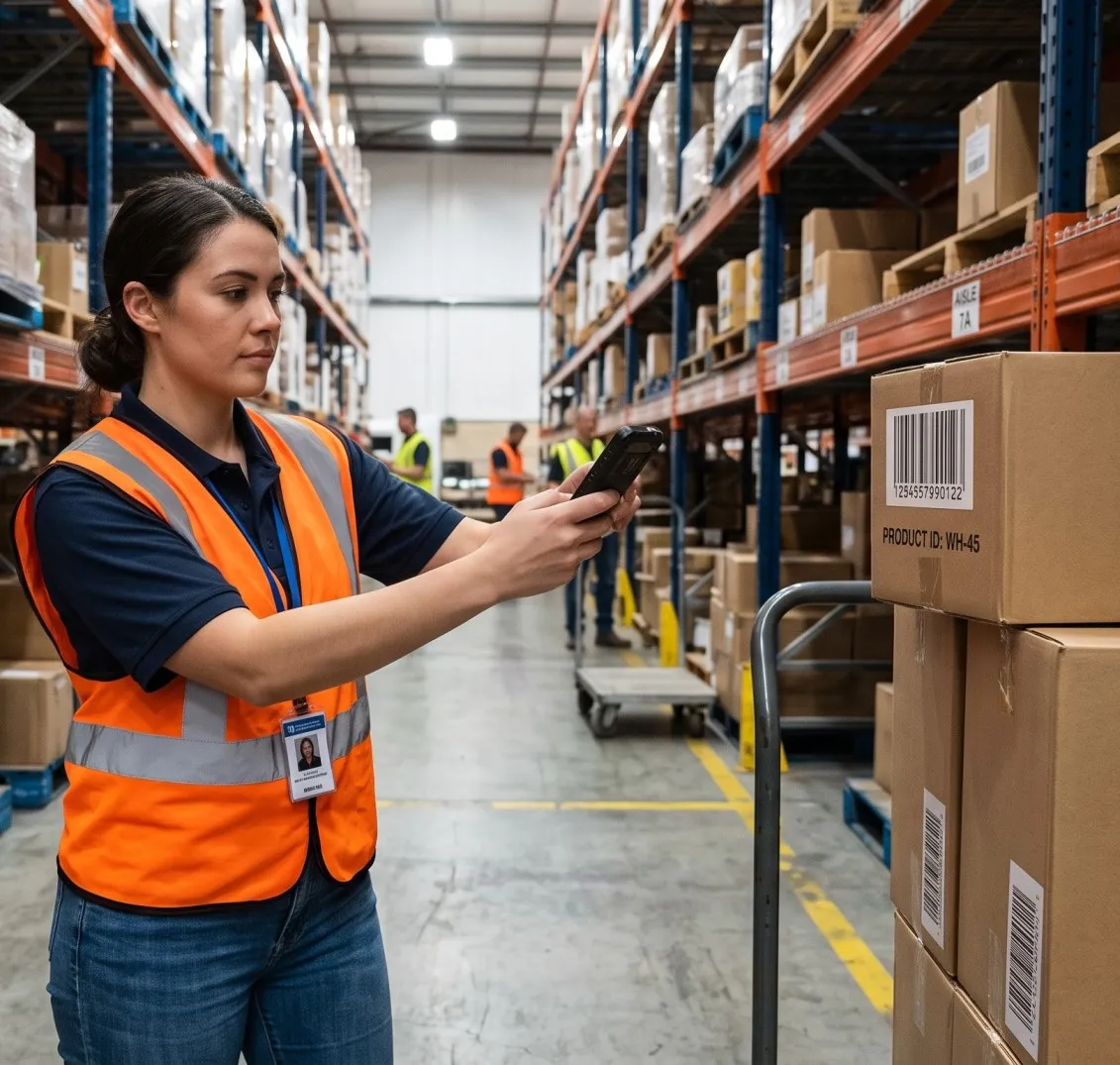
For cylinder deliveries, the driver uses the Fieldmaster Pocket app to scan every full cylinder dropped and every empty collected. The camera reads the barcode, so the driver doesn’t type serial numbers in the sun with gloves on.
Cylinder counts come straight from the scans. There is no separate count to fill in and no number to remember later. If the order was for four cylinders and three were scanned, the record shows three.
Because each cylinder has its own ID, the platform knows where every one of them is: at the depot, on a vehicle or at a customer’s site. Empties collected are recorded against the same customer, so cylinders that don’t come back show up by name.
Bulk Fills: Photograph the Flow Meter Before and After
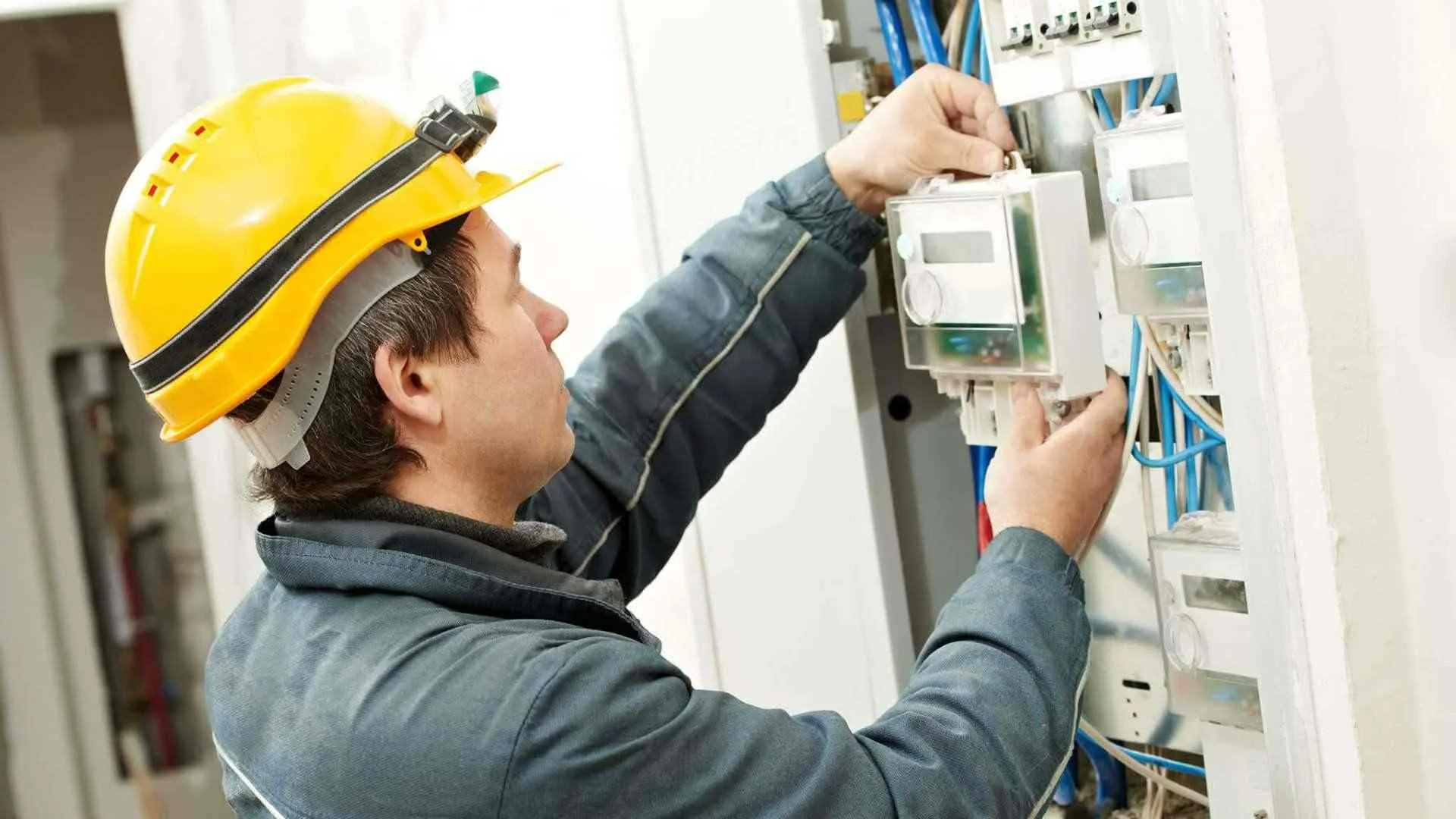
Bulk deliveries work differently. Instead of counting units, the driver photographs the flow meter before and after the fill.
Photo AI reads the meter in both photos and works out the litres delivered. The driver doesn’t type a reading, and the office doesn’t have to trust a handwritten number. If the photo is blurry or shows the wrong thing, the app asks for a new one on the spot, while the driver is still standing at the tank.
Both photos stay on the record, stamped with GPS location and time. If the customer questions the quantity weeks later, the office can show them the meter as it read before and after their fill.
The Customer Signs on the Spot
At the end of every delivery, the customer signs on the driver’s screen. The signature is stamped with the time and place, and attached to the same record as the scans and photos.
That gives one record per delivery that answers every question a dispute might raise:
- What was ordered
- Which cylinders were dropped and which empties were collected, or how many litres were filled
- Who delivered it, where and when
- Who signed for it
It’s exactly what reached the customer, signed for at the door.
Orders, Routes and Drivers in One System
Proof of delivery is the end of the process, not the whole of it. The same platform handles the steps before it.
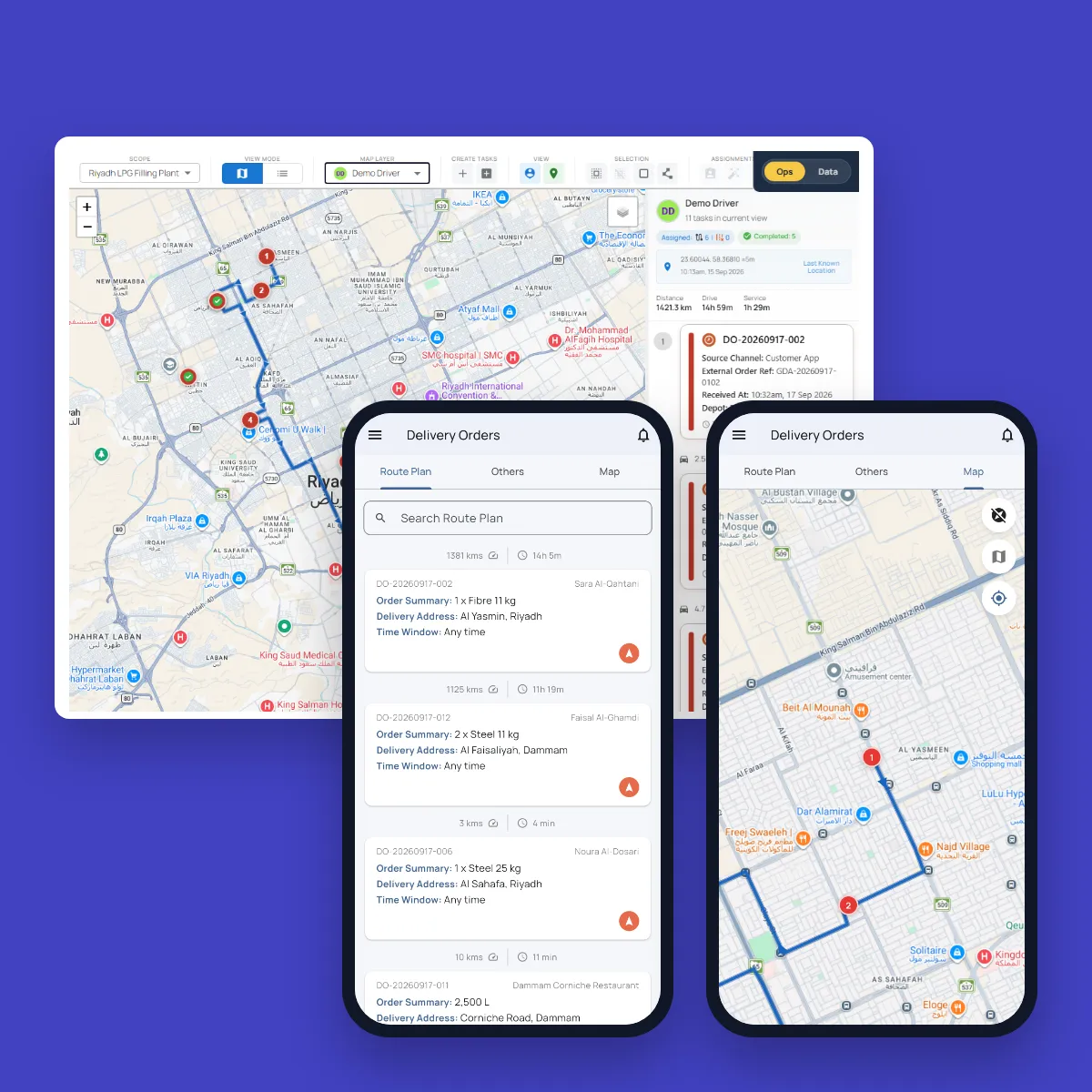
Delivery orders come in from your systems and are routed to drivers. Each driver sees a route plan on their phone, with the order summary, the delivery address and the customer’s time window for every stop. Dispatchers see every route on a map in the console, along with which deliveries are done and which are still waiting.
When the driver closes a delivery, the record reaches the office as soon as it’s saved. Arrival photos, signatures, barcode scans and on-time tracking are all part of the order, so there is nothing to collect from the driver at the end of the shift. The fleet management solution covers the vehicles and drivers behind these deliveries, from the morning vehicle check to fuel and workshop jobs.
Works Without Signal
Drivers deliver to basements, industrial yards and rural sites where mobile signal is weak or missing. The app keeps working offline. Scans, photos and signatures are saved on the phone and sync with their original timestamps when the signal returns.
The app also works in each driver’s own language, which matters in delivery teams where many drivers don’t read English comfortably.
What the Office Gets
For the office and finance team, the result is simple:
- Delivered quantities per order, ready to invoice. No retyping from paper notes, and no waiting for the driver to come back.
- Every cylinder tracked in and out. Which customer has which cylinders, and which empties have come back.
- Evidence for every dispute. Scans, meter photos, GPS, time and the customer’s signature, all on the same record.
- A live picture of the day. Which deliveries are done, which are late and which are still on the road.
When the record is complete at the door, invoicing can follow the same day, with proof attached. Disputes are settled by looking at the record instead of arguing about memories.
Built on the Same Platform as Every Other App
LPG delivery orders run in a fleet app built on the Fieldmaster platform, the same platform behind our meter reading, waste inspection and purchasing apps. The building blocks are shared: scanning, photo AI, signatures, GPS stamps, offline work and approvals. That is why a delivery app can be set up around your own products, depots and customers without starting from scratch.
The same pattern fits other businesses that deliver measured goods, such as water tankers or bulk materials. If you can count it or meter it, the driver can prove it at the door.
To see how this works step by step for gas distributors, read the gas cylinder delivery use case, or send us your requirements and we’ll send you a quote.