
Platform
The Features Behind a Ready Fleet
Fieldmaster.ai keeps vehicles, drivers, checks, repairs, dispatch and fuel in one system, so every record adds to the same vehicle’s history.
Records
One Record for Every Vehicle
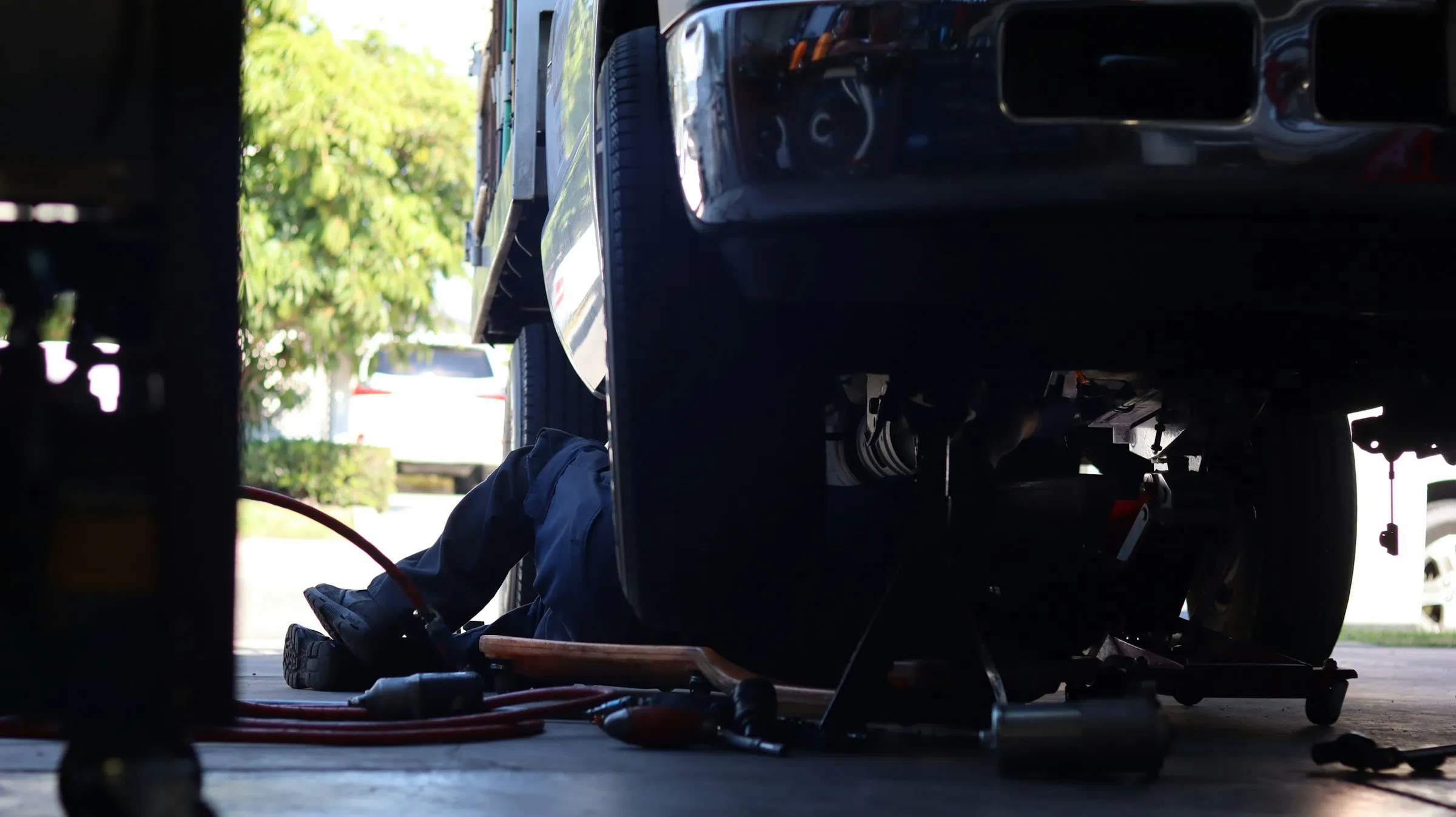
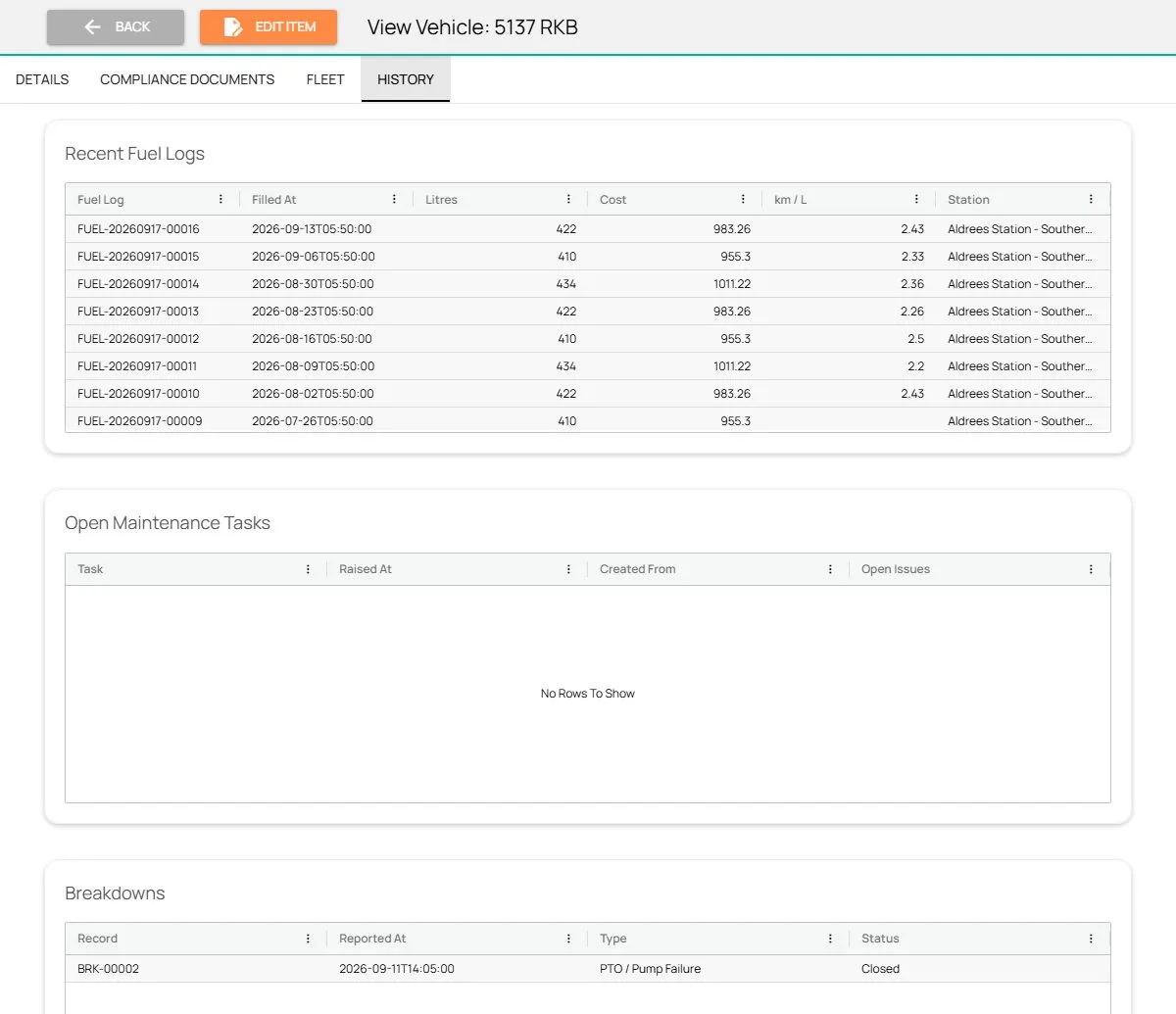
Each vehicle record brings together its details, compliance documents, service interval and odometer, with a history of recent fuel fills, open maintenance tasks and breakdowns. Plates are matched across every module, so a truck registered once is the same truck on the checklist, the fuel log, the dispatch and the workshop job.
That history is what you need for audits, warranty claims and decisions about which vehicles to repair or replace.
Compliance
Documents and Expiry Dates Watched for You
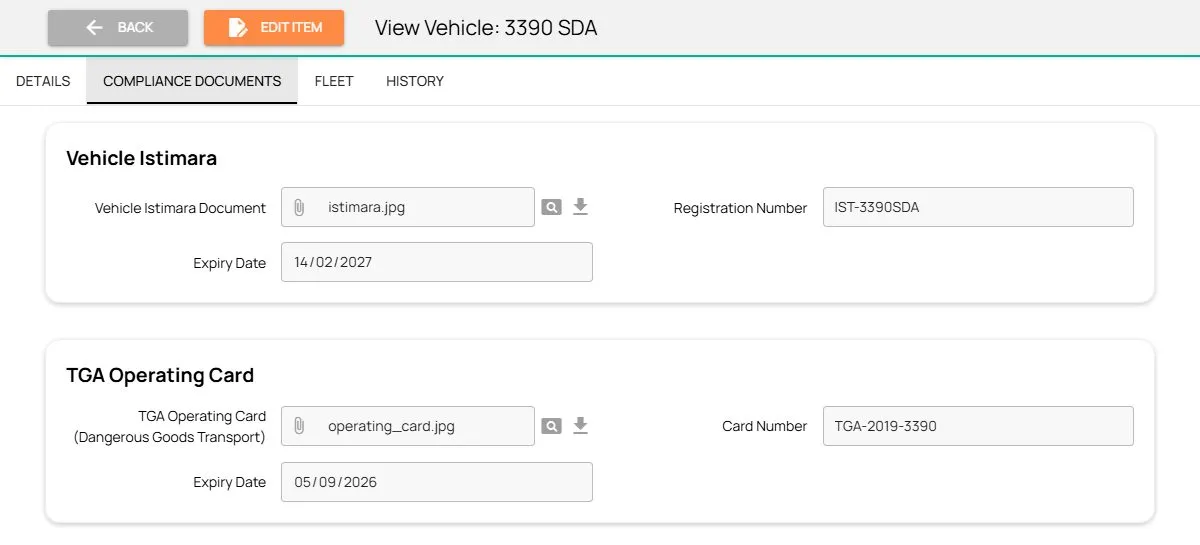
Vehicle registrations and operating permits, and driver licences and permits, are stored with photos, numbers and expiry dates. The Control Tower lists everything expired or expiring in the next 30 days, and reminders can go to the people responsible before a document lapses.
Document names follow your country: Mulkiya and OPAL in Oman, or Istimara, TGA operating cards and hazmat licences in Saudi Arabia.
AI
AI That Reads Plates, Odometers, Receipts and Voice Notes
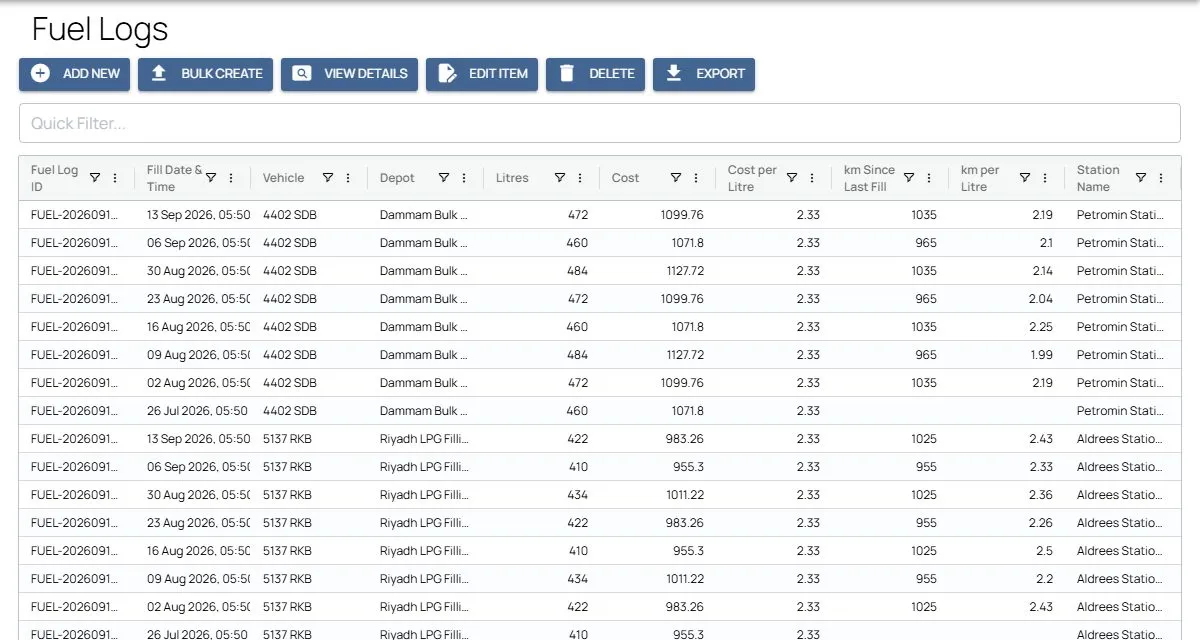
Drivers take a photo instead of typing. AI reads the number plate and matches it to the vehicle, reads the odometer, and turns a fuel receipt in Arabic or English into litres, cost, station and date. Breakdowns are described in a voice note in the driver’s own language, and AI picks the breakdown type and writes the summary for the workshop.
Fuel economy is worked out on every fill, so a vehicle that uses more fuel than usual stands out in the fuel log.
AI
AI That Makes Sure Vehicle Checks Are Done Properly
A ticked checklist doesn’t prove the vehicle was checked. AI looks at the photos behind every item. We switch on the checks that matter to your operation and tune them to your standards during the build.
Wheel nuts
Checks each wheel photo for loose or missing nuts from the position of the wheel nut indicators.
Tyres
Flags worn tread, bulges and sidewall cuts in the tyre photos before the vehicle leaves the depot.
New damage
Compares body photos with the last inspection and points out new dents and scratches, so damage is tied to the shift it happened on.
Warning lights
Reads the dashboard photo at clock-in for warning lights and the fuel level.
Leaks and safety kit
Spots fluid leaks under the vehicle, and a missing fire extinguisher or spill kit on tankers.
Honest checklists
Each item needs a photo from its reference angle. A photo of the wrong part, or one reused from another check, is rejected.
Features
More Features Fleet Managers Use
Face-check clock-in
Drivers clock in with face recognition and GPS, and a depot boundary can stop clock-ins from anywhere else.
Checklists with reference photos
Each checklist item shows a photo of what to check, with extra items for tankers and dangerous goods.
Breakdown response times
Each breakdown type carries a workshop response time, from minutes to days, set to your agreements.
Workshop app
Mechanics record the diagnosis, fix, spare parts and repair photos for each issue on their phone.
Shift dispatch with idle reasons
Vehicles and drivers left unassigned are recorded with the reason, for every depot and shift.
Delivery orders and proof of delivery
Orders from your systems are routed to drivers and closed with arrival photos, a signature, barcode scans and on-time tracking.
Safety reports from the road
Observations, incidents and depot inspections run in the same app, against the same depots and vehicles.
Telematics connection
Where vehicles carry telematics or IVMS, it can be connected to add live position and engine data to each vehicle.
Offline and multilingual
Android and iOS apps that work without signal and in more than 40 languages.
Security and your data
Built for Operations Where Accountability Matters
How your data is protected, where it’s hosted, and how you take it with you.
Encrypted in transit and at rest
Field records, photos and documents are encrypted on their way from the device and while stored on our servers.
Choice of hosting location
Hosted in the US or the EU by default, on enterprise-grade servers. Other locations, for local data rules, are available at extra cost.
Automated backups
Backups run automatically across the whole system, so your data can be fully recovered after an emergency or a system failure.
Your data, yours to export
Your organization owns its data. Every module has an export to Excel, and photos and recordings are provided as download links on request.
Access managed by your admins
Your administrators add and remove people and decide what each role can see and do, down to a single site or unit, without a support ticket.
Complete audit trail
Every submission, edit and approval is time-stamped and attributed, with GPS-tagged photos, ready for audits and disputes.
FAQ
Questions About the Platform
Does the mobile app work offline?
Yes. Field teams can clock in, complete tasks, record inspections and capture photos with no connection. Everything is stored on the device and syncs to the dashboard as soon as it reconnects, so no work is lost.
Which languages does the app support?
The app supports more than 40 languages, including Arabic, Urdu, Hindi, Bengali, Malayalam, Tamil and Tagalog. It follows the language set on each worker’s device, so crews see instructions, checklists and tasks in the language they are most comfortable with. Voice notes can be recorded in any language, even mixing languages in one note. The words appear as the worker speaks, and they can read the English translation before submitting.
Can we build our own workflows?
Yes. Fieldmaster.ai is a low-code platform, and our team configures the forms, approval rules and task sequences to match your business rules. New workflows and changes are delivered in days, without a development project on your side.
Does it connect to our existing systems?
Yes. Fieldmaster.ai connects through open APIs, webhooks and Excel import and export, and can feed your reporting database. Our team builds the link to your ERP, billing or customer systems, so field data flows into the tools your office already uses.
What support do you provide?
Support comes straight from the people who built your app, in Muscat, Ajman and Cochin. During rollout we train your key users, who then train everyone else, and we stay close in the weeks after go-live.
After that, support is available by phone, email and chat, every request is tracked from report to verified fix, and changes to your app take days, not quarters.