
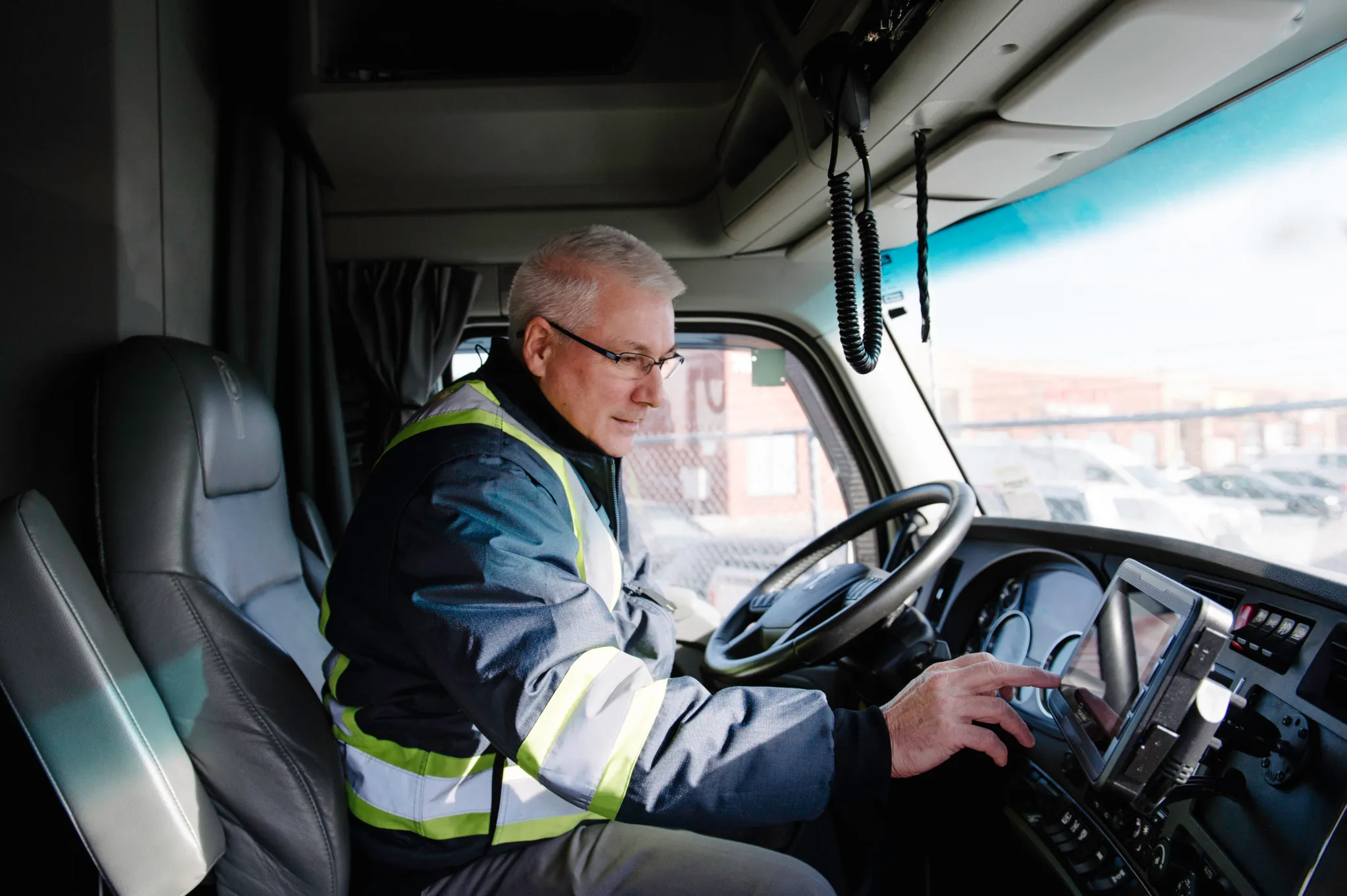
A journey management system is the process a company uses to plan, approve, track and close work-related driving. Its job is to catch a risky trip before the vehicle leaves, and to know where the vehicle is until it arrives.
It is a process first. Software can run it, but the system is the set of rules your drivers, journey managers and approvers follow for every trip.
Why Companies Need One
Road travel is one of the biggest hazards in oil and gas, utilities and contracting. Crews drive long distances, often at night, often to remote sites, often with heavy vehicles or hazardous loads. Most trips go fine, so the checks are easy to skip.
A journey management system makes the checks the same for every trip, whoever is on shift.
What a Journey Management System Covers
- Driver and vehicle checks. Licences and permits are valid, and the vehicle's registration and certificates are current.
- Pre-trip vehicle inspection. A standard checklist is completed before the trip, with proof of which vehicle was inspected.
- Route planning. The route, the arrival time and the rest breaks, so drivers are not pushed past safe driving hours.
- Risk assessment. Night driving, heavy vehicles, hazardous loads, long distances and weather raise the risk of a trip.
- Approval by risk. Low-risk trips go through quickly. Higher-risk trips go to a more senior approver.
- Tracking. The vehicle's progress is followed against the plan, with a way to raise the alarm if it stops or strays.
- Close-out. The journey is closed on arrival, and the record is kept for audits.
Journey Management Plan or Journey Management System?
The two terms are often mixed up. A journey management plan is the document for one trip: route, stops, contacts and hazards. A journey management system is everything around it: who is allowed to drive, how plans are approved, how trips are tracked and how the records are kept.
A plan on paper can be good. A system makes sure every trip has one.
Where Paper and Spreadsheet Systems Break Down
- Journeys are approved without anyone checking licences, permits or vehicle documents, and expired papers are found after the vehicle has left.
- Vehicle inspections are done without a checklist or photo, so nobody can show which vehicle was inspected.
- Higher-risk journeys are not escalated in a consistent way.
- Driving time limits and breaks are written in the procedure but not enforced in the plan.
- Once the vehicle leaves, nobody knows whether it is following the plan.
- When an audit comes, the records are scattered across formats, or were never kept.
What Journey Management Software Adds
- The check happens before the trip. Expired documents, a failed inspection or a missing approval stop the journey with the exact reason.
- Rules are enforced, not just written down. Breaks are added to the plan and a plan cannot run too long between them.
- Approvals follow risk. The system works out the risk from the plan and sends the trip to the approvers it needs.
- The phone does the tracking. The route is recorded from the driver's phone, including without signal, and compared with the plan.
- Records are complete. Every request, inspection, approval and close-out is kept, with who did it and when.
How to Get Started
Do not try to cover every vehicle at once:
- Pick one site or contract and list the journey rules you already have.
- Put driver and vehicle documents, with expiry dates, in one place.
- Run requests, inspections and approvals for the highest-risk journeys first.
- Add tracking and close-out once approvals are routine, then widen to other sites.
How Fieldmaster Approaches It
Fieldmaster builds the journey app around your own rules, risk levels and approval chain. Drivers request the trip and inspect the vehicle from their phone, by voice and photo. The system checks documents and inspection answers, plans the route with breaks, sends the trip to the right approvers and tracks it until it is closed. Real journeys can run through it within about ten days of setup.
See the details on our safe journey management page, or talk to us about your fleet.