.png)
.png)
You're a field service professional who's been observing what seems like Artificial Intelligence taking over the world slowly but surely. You're thinking: "I need to get AI to run my field operations and I need it yesterday!".
As a service provider in the field operations industry who talks to hundreds of clients and prospects across different industries, I have good news and bad news for you:
- ✅ The good news: AI can (probably) help improve your operational efficiency.
- ❌ The bad news: Your company is not ready for it.
AI is Data-Greedy
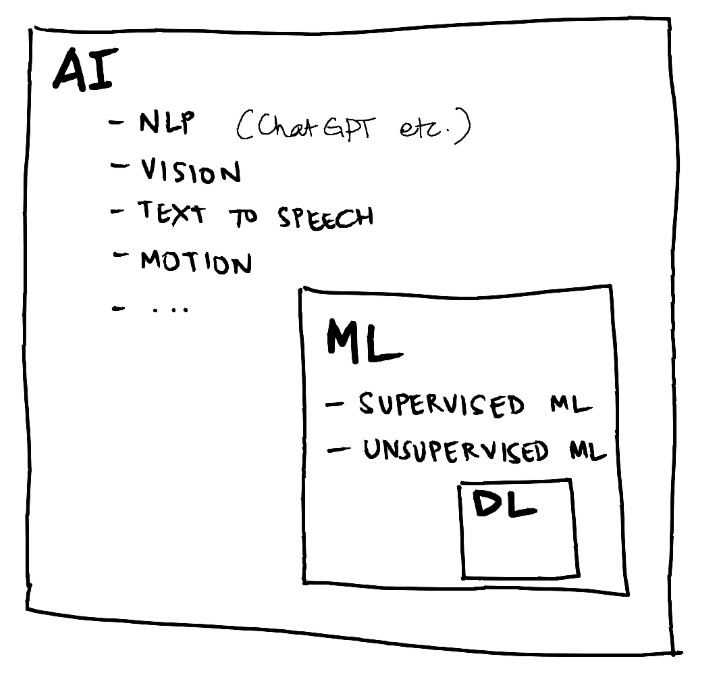
The most popular type of AI today is undoubtedly NLP (Natural Language Processing) - examples are ChatGPT, Gemini, Llama, Mistral, and the like.
However we're more interested in the Machine Learning (ML) part of AI, which is capable of looking through existing data and identifying patterns in either a supervised way (humans helping by tagging the data with labels and tags) or completely unsupervised. DL is Deep Learning, which uses multiple layers of Neural Networks to gain insights into data which can be very useful in business cases, although interestingly, it doesn't usually share how it came upon those insights.
I bet you've noticed already: the common thread here is data. AI's ability to gain insights effectively and suggest improvements hinges on the availability of large quantities of high quality data.
I'm not talking about data that you can download from somewhere on the internet. I'm talking about data that is specific to your organization, your department, and your operations. If your organization is not digitized sufficiently and has not been capturing field operations data for several months or years, no AI system can deliver reliable, actionable insights.
The key takeaway? AI should never be the starting point—it’s the next step after creating a solid digital and data foundation.
Doing it right: Digitizing Field Operations Processes
Why Digitization Is Essential
Digitization transforms manual and fragmented processes such as paper-based records or siloed digital systems into cohesive digital workflows. This shift is not just a precursor to AI in Field Management; it delivers its own value by enabling seamless data collection, better collaboration, and operational efficiency.
Benefits of Digitization (apart from getting ready for AI):
- Cut costs and boost profits: Reduce overheads quickly and drastically to gain instant savings.
- Save hours every day: Automate workflows and manage tasks faster to free up valuable resources and reduce employee frustration.
- Eliminate costly mistakes: Minimize or even completely avoid errors with accurate data and robust validation processes.
- See everything and act smarter: Gain real-time insights into field activities to make informed decisions.
- Take full control: Manage every aspect of your operations with granular control and customization.
- Enable scaling: Adapt to growing demands effortlessly with flexible, scalable tools.
Embarking on the Digitization Journey
When asked, most companies say that they are "digitized" to some extent, but on digging deeper it's apparent that they have barely scratched the surface.
With over 15 years doing digitization, here's what has worked best for us:
- Lay down the current processes that are working for you in Manual Operations. These are what make your business unique and stand out from the competition.
- Digitize the primary process of your operations (the fieldwork) by implementing systems and mobile apps for Task Creations, Routing & Planning, Assignments, and Real-time Visibility.
- Extend the digitization to your back-office by creating interfaces for the most important office tasks that enable your primary process. This could be Attendance Management, Stock Management, Reporting, Analytics, and more.
- Complete the Digitization by closing the gaps in your workflow, by adding interfaces and modules for Document Generation, Approvals, Operational Endpoints, Invoicing, and more.
Once we reach here, we are ready to implement AI and automation in field service management.
At Fieldmaster.ai we developed a framework called the Digitization Staircase after surveying over a hundred firms of different industries and sizes, for helping our clients achieve digitization and change management faster. Read more about it here.
Ensuring High-Quality Data for AI
Why Data Quality Matters
AI models depend on high-quality data to function effectively. Without accurate, complete, and consistent data, the outputs of even the most sophisticated AI systems can be flawed or misleading.
Characteristics of High-Quality Data:
- Accuracy: Data must reflect reality without errors or inconsistencies.
- Completeness: Missing information can lead to gaps in AI analysis.
- Consistency: Uniform formats across systems ensure interoperability.
- Relevance: Data must align with specific AI use cases.
- Timeliness: Outdated data compromises decision-making.
Common Challenges in Data Preparation:
- Data Silos: Information stored in different formats or systems limits its usability.
- Unstructured Data: Freeform text, images, and other unstructured data types require complex processing.
- Data Cleaning: Identifying and fixing errors can be labor-intensive.
Steps to Improve Data Quality:
- Establish standardized data collection and validation protocols.
- Use data cleaning tools to eliminate errors and inconsistencies.
- Regularly audit datasets for accuracy, completeness, and relevance.
- Invest in AI-friendly data management platforms for seamless integration.
Enabling end-to-end digitization and ensuring high-quality data is exactly what we do at Fieldmaster.ai. Click here to read more on why our clients choose us.
A Case for Digitization Before AI: Learning from Real-World Examples
👍 Success Story: Logistics Company
A leading logistics firm digitized its fleet management system, integrating GPS tracking and automating work order processes. This effort created a unified, real-time dataset. When they later deployed an AI-driven route optimization system, it reduced delivery times by 15% and fuel costs by 10%, proving the value of laying a digital foundation.
👎 Failure Example: Retailer’s Inventory Management
A retailer hastily adopted an AI-driven inventory system without addressing data inconsistencies across locations. The result? The AI incorrectly predicted demand, leading to stockouts in high-demand areas and overstock in others. Rectifying these issues required months of manual corrections and significant financial losses.
Benefits of a Well-Prepared Foundation
By prioritizing digitization and data quality, organizations can:
- Unlock AI's Full Potential: Reliable data fuels accurate predictions, actionable insights, and better decisions.
- Avoid Costly Mistakes: Prevent implementation failures that can derail projects.
- Enhance Competitiveness: A robust digital and data foundation sets the stage for sustained innovation.
Conclusion
AI is a powerful tool, but its success depends on preparation. Digitizing field operations and ensuring high-quality data are non-negotiable prerequisites for effective AI adoption. By addressing these foundational steps, your organization can unlock the full promise of AI, improving efficiency, decision-making, and customer satisfaction in the process.
.png)

"Fieldmaster.ai transformed how we manage our operations across multiple sites. The accuracy we gained from field-first data collection eliminated costly mistakes and saved us months of reconciliation work."
Ready to transform operations
Discover how Fieldmaster.ai helps companies like yours achieve field KPIs with precision and speed.

Stay ahead in the field
Get insights and strategies delivered to your inbox every week from FieldMaster AI.
FAQs
Questions about field-first data and how FieldMaster AI works
Field-first data is information captured at the source, where work actually happens. Instead of relying on reports compiled hours or days later, it's collected in real-time by workers on the ground. This approach eliminates the gaps and inaccuracies that come from office-based data collection.
FieldMaster AI's mobile app functions completely offline. Workers collect data without internet connectivity, and when the connection returns, all information syncs automatically. Nothing is lost, and operations continue uninterrupted regardless of network conditions.
Yes. Our native mobile app is built with zero-effort multilingual support. Workers of any ethnicity or language background become instantly familiar with the interface. There's no language barrier to adoption or understanding.
It means each user sees only the information relevant to their role. A supervisor has different access than a manager, who has different access than a field worker. This keeps operations organized and ensures people focus on what matters to them.
We've been in business since 2015, starting as field contractors ourselves. That experience shaped everything we built. We've added over $200 million in value to projects across the GCC by focusing on what actually works in the field.