.png)
.png)
Never Miss a KPI Again: End Heavy Penalties for Missed Collections & Citizen Complaints
Manage thousands of bins across regions without missing a single KPI
Why Regular Software Fails Waste Management Teams
Most field management tools were built for simple operations. They crumble when faced with multi-region hierarchies, thousands of collection points, and municipal SLAs that demand perfection.Waste operations aren’t linear. They run across zones, teams, contractors, and strict compliance layers. Most systems can’t keep up once scale increases.
Hierarchies across regions and contractors become difficult to manage
Missed pickups or inspections go unnoticed until it’s too late
SLA tracking happens after the fact, not during execution
%201%20(1).png)
How it works
Instead of treating field work as updates, the system captures activity as it happens and connects it to KPIs.
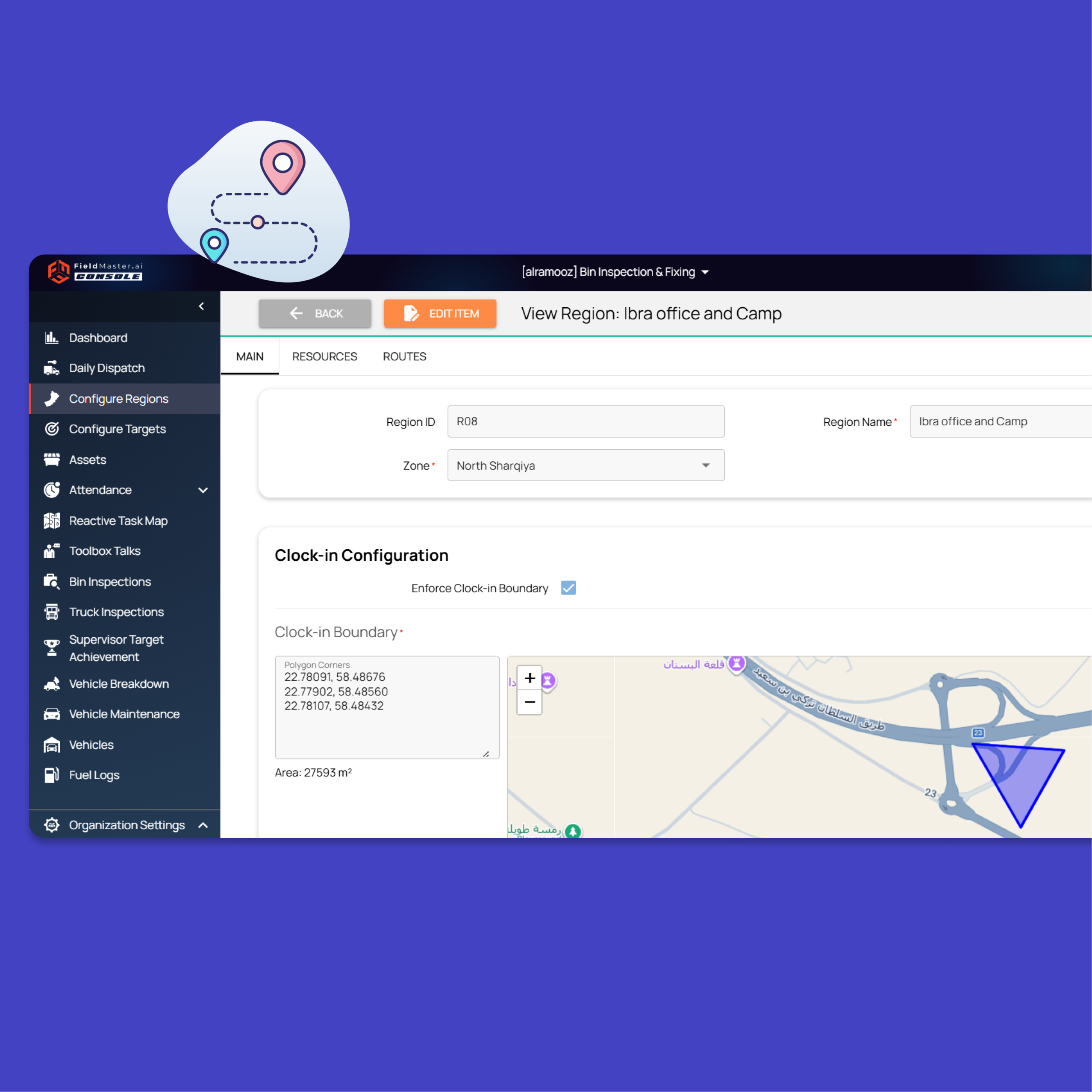
Multi-region structure with defined accountability
Define collection targets, inspection frequencies, and compliance rules across every region and zone simultaneously ..
Each level has defined KPIs, inspection frequencies, and SLA rules. No confusion on who is responsible for what.

Taskflows that mirror actual field work
Click any bin and see its entire service record, maintenance schedule, and compliance status in seconds. Daily collection, inspections, complaint handling, and maintenance follow structured workflows.
Each task moves through predefined stages with required inputs at every step. Nothing gets marked complete without proper validation.
-Picsart-AiImageEnhancer.jpg)
Driver and supervisor strict clock-in/out
Automated time tracking ensures accountability and prevents route deviations that cost you penalties.Tasks are assigned based on location, availability, and workload.
Routes are planned to reduce overlap and ensure coverage.
Supervisors don’t have to manually redistribute work throughout the day.
Built to handle operational volume
Fieldmaster handles the volume that breaks other systems. These are the metrics that prove it works. Waste operations involve thousands of daily activities. The system is designed to handle that load without slowing down or losing visibility.
Bins tracked and serviced daily
SLA penalties across managed operations
Visibility into routes, inspections, and task completion
From planning to execution to monitoring
The system connects every step so work moves without delays or gaps.
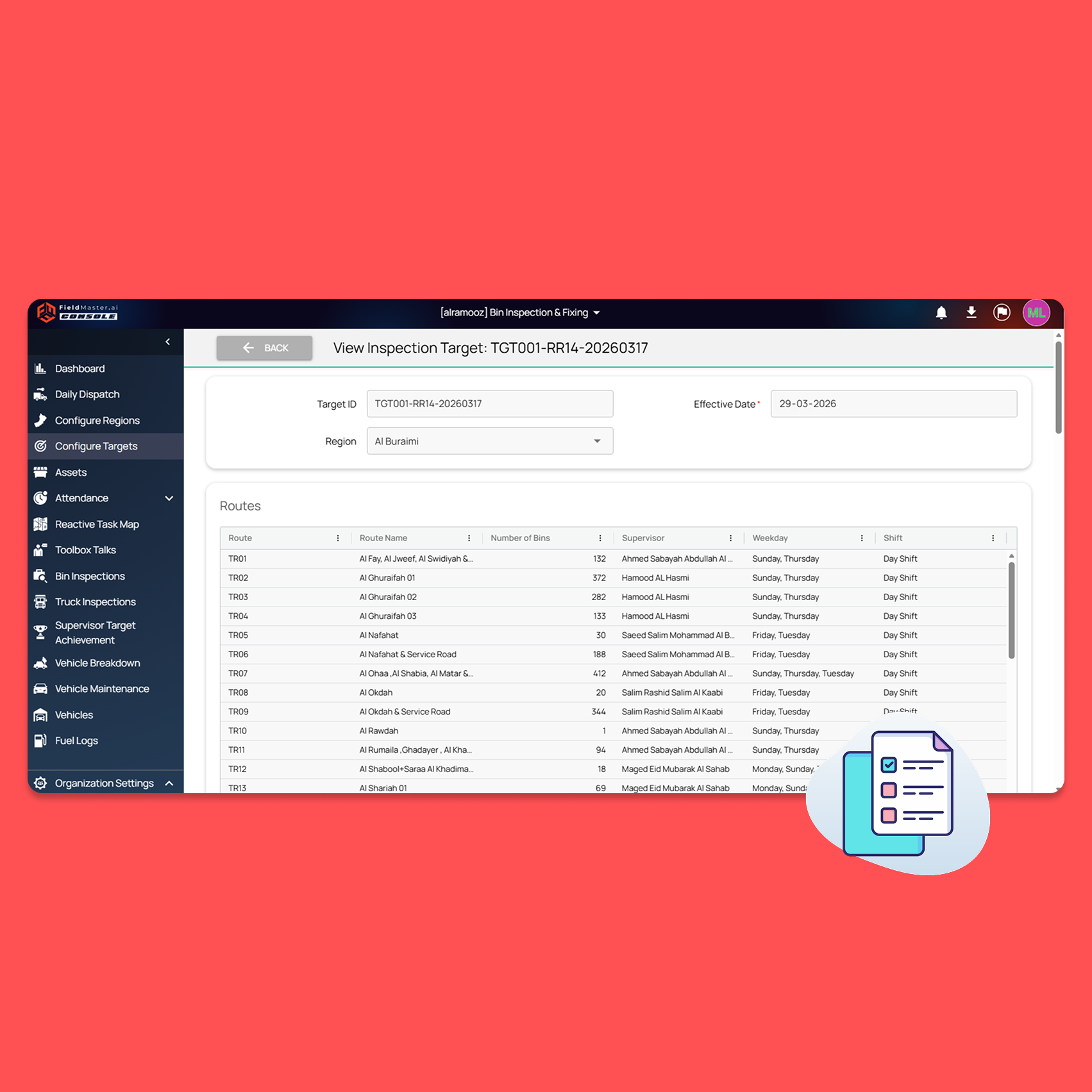
Assign optimized routes to teams
Routes calculate themselves based on bin locations, inspection schedules, and traffic patterns. Tasks are distributed to field teams with clear instructions.
Teams start the day with everything already assigned.
Execute and capture activity in the field
Field teams complete collections, inspections, and issue reporting through the app.
If a bin is missed, damaged, or inaccessible, it is logged immediately.
New tasks are triggered automatically based on what’s reported.
Office monitors everything from map
Supervisors track routes, team movement, and SLA status on a live dashboard.
If something falls behind, it can be reassigned or escalated instantly.
No waiting for end-of-day reports to take action.
.png)
"Before Fieldmaster, routing was manual and tracking depended on spreadsheets. Missed KPIs and penalties were common. With real-time visibility and structured workflows, everything is now tracked as it happens"