.png)
How Slow Feedback Loops Impact Business Agility and Growth

The ability to respond quickly to challenges and opportunities is essential for businesses today. Without the ability to act on feedback promptly, organizations struggle to adapt, making them vulnerable to competitors who can move faster. One of the most significant barriers to achieving operational agility is slow feedback loops.
The Problem with Delayed Feedback
Timely feedback drives decision-making. When feedback from customers, employees, or performance data is delayed, businesses lose the chance to act quickly and solve problems in real-time.
For example, in utilities, a power company receiving a report about an outage may delay dispatching repair teams. By the time action is taken, customers face prolonged disruptions, and the company's reputation takes a hit. Acting quickly to resolve these issues can minimize downtime and maintain service reliability.
In manufacturing, a delay in reporting machinery malfunctions can bring the entire production line to a halt, wasting valuable time and resources. Immediate feedback—whether through automated systems or direct communication—ensures that the issue is addressed before it causes significant disruption, keeping operations on track.
Why Slow Feedback Limits Flexibility
The ability to respond to changing conditions is crucial to staying competitive. Slow feedback leads to outdated information, which impacts decision-making and reduces flexibility.
Take logistics, for example. A logistics company relying on real-time data to optimize routes may face delays in action if feedback isn’t processed quickly. If a delivery route needs adjusting due to a traffic delay, immediate feedback allows for real-time route optimization. Slow processing, however, can result in missed deadlines and unhappy customers.
In construction, delays in reporting safety issues, design flaws, or material shortages can lead to costly project delays. By collecting feedback directly from the field in real-time, businesses can adjust quickly, keeping projects within budget and on schedule.
The Financial Impact of Slow Feedback
In industries like banking and finance, a delayed response to customer complaints can have direct financial consequences. For example, if a customer experiences an issue with an online transaction, the longer it takes to resolve, the greater the risk of losing the customer. Immediate feedback and fast solutions help companies retain customer trust and ensure satisfaction.
In telecommunications, slow feedback on service interruptions can result in prolonged issues and dissatisfied customers. Timely action, powered by real-time feedback systems, allows telecom companies to resolve problems quickly, improving customer retention and minimizing churn.
An effective feedback loop helps organizations capture, analyze, and act on insights faster, ensuring continuous improvement and responsiveness.
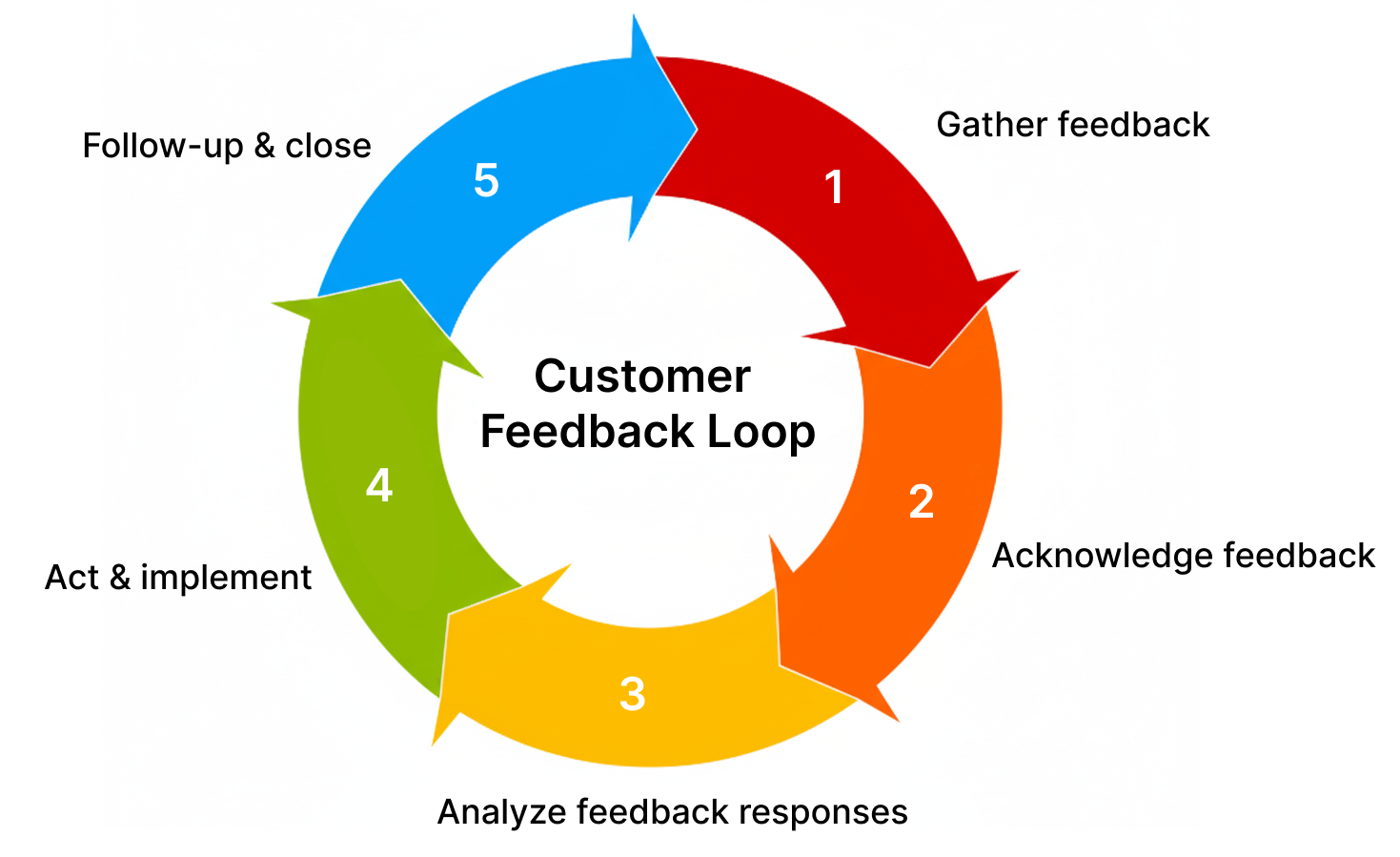
The Role of Real-Time Feedback in Enhancing Agility
Real-time feedback enables organizations to act quickly and adjust to new information. In field sales, when teams receive immediate feedback from customers, they can adjust their pitch or product offerings on the spot, increasing the chances of closing deals.
A Solution to Accelerate Feedback Loops
To stay competitive and agile, businesses need the ability to act on feedback instantly. Fieldmaster.ai offers a range of tools that help companies close feedback loops faster. With real-time data collection, automated task assignments, and seamless communication across teams, businesses can ensure that feedback is captured and acted upon in the moment.
For example, tools like task management and real-time reporting ensure that any issue, whether from customers, employees, or data, is quickly routed to the right team for immediate resolution. These tools help businesses remain agile, respond faster, and make informed decisions that improve overall efficiency.
Conclusion
When feedback is delayed, companies lose the opportunity to act quickly, leading to inefficiencies, missed opportunities, and customer dissatisfaction. With real-time feedback systems in place, businesses can collect insights instantly and take immediate action, enhancing their operational agility.
By leveraging Fieldmaster.ai tools, companies can streamline feedback processes, ensure that issues are addressed promptly, and make faster, smarter decisions. This not only improves internal operations but also strengthens customer relationships and drives business success.
.png)

"Fieldmaster.ai transformed how we manage our operations across multiple sites. The accuracy we gained from field-first data collection eliminated costly mistakes and saved us months of reconciliation work."
Ready to transform operations
Discover how Fieldmaster helps companies like yours achieve field KPIs with precision and speed.

Stay ahead in the field
Get insights and strategies delivered to your inbox every week from Fieldmaster .
FAQs
Questions about field-first data and how Fieldmaster works
Field-first data is information captured at the source, where work actually happens. Instead of relying on reports compiled hours or days later, it's collected in real-time by workers on the ground. This approach eliminates the gaps and inaccuracies that come from office-based data collection.
FieldMaster AI's mobile app functions completely offline. Workers collect data without internet connectivity, and when the connection returns, all information syncs automatically. Nothing is lost, and operations continue uninterrupted regardless of network conditions.
Yes. Our native mobile app is built with zero-effort multilingual support. Workers of any ethnicity or language background become instantly familiar with the interface. There's no language barrier to adoption or understanding.
It means each user sees only the information relevant to their role. A supervisor has different access than a manager, who has different access than a field worker. This keeps operations organized and ensures people focus on what matters to them.
We've been in business since 2015, starting as field contractors ourselves. That experience shaped everything we built. We've added over $200 million in value to projects across the GCC by focusing on what actually works in the field.