.png)
How Manual Attendance Compromises Accuracy and Trust in Your Operations
-Picsart-AiImageEnhancer.jpg)
Attendance tracking often looks simple: employees mark their time, HR tallies the numbers, and payroll gets processed. But for many businesses, this process is still manual, relying on paper sheets, Excel files, or outdated punch cards. What feels routine creates hidden costs, compliance risks, and credibility issues for operations.
Why Manual Attendance Still Exists
Manual attendance methods remain common because they seem cheap, familiar, and easy to maintain. Many organizations, especially those with distributed or shift-based teams, continue to depend on spreadsheets or registers instead of digital systems. But as operations scale, these methods quickly show their limits.
The Problems with Manual Attendance
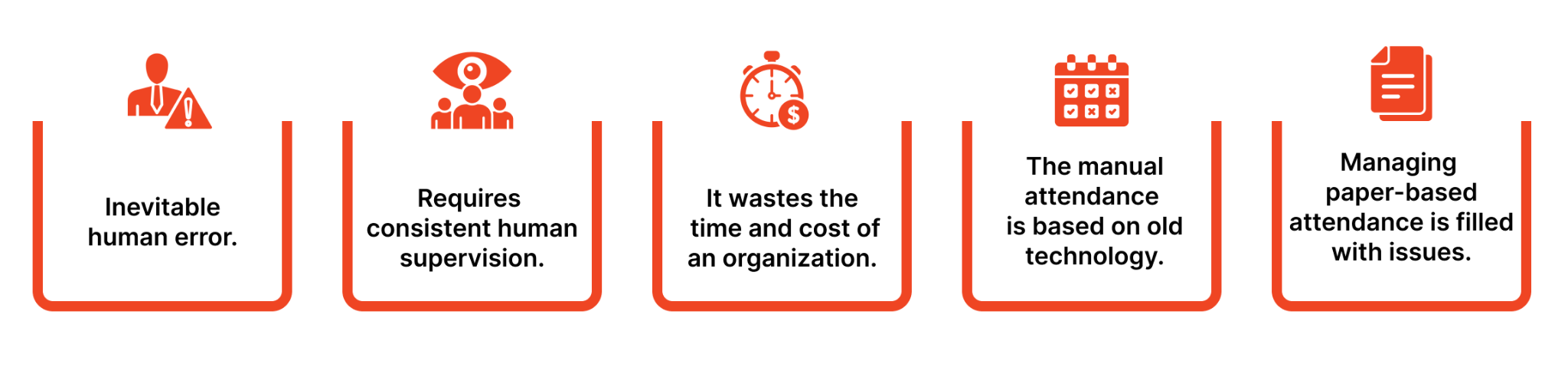
1. Errors and Inaccuracies
Manual entries are prone to mistakes from typos to misreporting. Studies show that businesses using manual timesheets can lose up to 4% of annual payroll costs due to inaccuracies and time theft .
2. Lack of Real-Time Visibility
HR and operations managers often wait days or weeks to consolidate attendance data. Without real-time insights, decisions like shift scheduling, overtime approvals, or leave management are reactive, leading to wasted hours and misaligned resources.
3. Compliance Risks
Labor laws in many countries now require precise, transparent attendance records. Manual methods create gaps that expose businesses to fines or disputes. For example, the U.S. Department of Labor reported that 80% of employers fail to properly track employee hours, risking penalties and lawsuits (Source: DOL).
4. Productivity Loss and Trust Issues
Employees lose trust when payroll errors occur repeatedly. Manual attendance also makes it harder to analyze absenteeism trends or workload distribution, which directly affects productivity. Over time, this impacts morale and retention.
The challenges of manual attendance tracking
How Modern Operations System Solves This
Switching to a digital attendance system isn’t just about replacing timesheets; it’s about integrating attendance data into a larger operational framework. Accurate, real-time, and accessible attendance data serves as the foundation for payroll, compliance, and workforce management.
At FieldMaster.ai, attendance tracking seamlessly integrates into a broader operational ecosystem. Rather than treating attendance as a standalone function, it becomes part of a connected workflow, enabling businesses to maintain transparency and accountability across all departments.
By incorporating attendance data into the overall management system, businesses gain real-time visibility, allowing them to make informed decisions regarding resource allocation, compliance, and workforce optimization. For instance, automated reporting and task progress tracking tools can eliminate manual effort, reducing human error and ensuring data integrity.
Why This Matters for the Future of Operations
As operations scale, manual attendance methods simply can't keep up with the need for precision and speed. Attendance data is no longer confined to HR’s paperwork; it affects payroll accuracy, productivity, and even customer commitments. Without timely, accurate attendance records, businesses risk creating inefficiencies that impact every level of the organization.
Digital operations management platforms transform attendance into more than just a tracking tool. By connecting it with other key operational functions, it ensures a streamlined, efficient process where accuracy and trust are prioritized, fostering long-term growth and business success.
.png)

"Fieldmaster.ai transformed how we manage our operations across multiple sites. The accuracy we gained from field-first data collection eliminated costly mistakes and saved us months of reconciliation work."
Ready to transform operations
Discover how Fieldmaster helps companies like yours achieve field KPIs with precision and speed.

Stay ahead in the field
Get insights and strategies delivered to your inbox every week from Fieldmaster .
FAQs
Questions about field-first data and how Fieldmaster works
Field-first data is information captured at the source, where work actually happens. Instead of relying on reports compiled hours or days later, it's collected in real-time by workers on the ground. This approach eliminates the gaps and inaccuracies that come from office-based data collection.
FieldMaster AI's mobile app functions completely offline. Workers collect data without internet connectivity, and when the connection returns, all information syncs automatically. Nothing is lost, and operations continue uninterrupted regardless of network conditions.
Yes. Our native mobile app is built with zero-effort multilingual support. Workers of any ethnicity or language background become instantly familiar with the interface. There's no language barrier to adoption or understanding.
It means each user sees only the information relevant to their role. A supervisor has different access than a manager, who has different access than a field worker. This keeps operations organized and ensures people focus on what matters to them.
We've been in business since 2015, starting as field contractors ourselves. That experience shaped everything we built. We've added over $200 million in value to projects across the GCC by focusing on what actually works in the field.