.png)
What Breaks in Banking Operations Without a Vendor Management System

Across most large banking teams especially in credit ops, verifications, collections, and field service—there’s a persistent, messy problem. And no, it’s not legacy tech or outdated interfaces.
It’s the unseen backend workflows where external vendors carry out tasks that never show up in dashboards, Slack threads, or Jira tickets.
These vendors—spread across cities and time zones—are essential. But when their work runs without structure or visibility, things quietly fall apart.
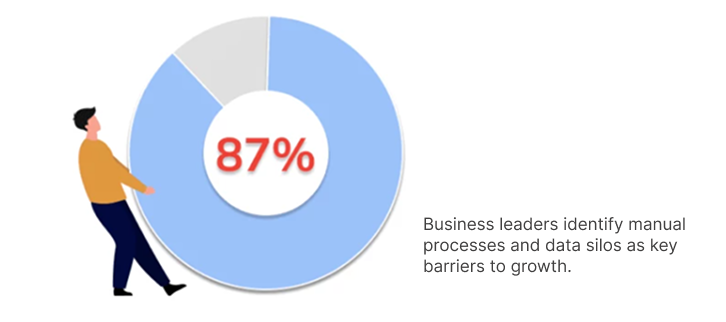
“ 87% of fast-growing companies face barriers from fragmented systems and manual coordination Read the Jitterbit study “
Where It Starts Going Sideways
1. Assignments Drag—Not Because Teams Are Slow, But Because They're Guessing
Take something as simple as assigning a site visit.
- Who’s available today?
- Are they authorized for this region?
- Is their ID still valid?
Instead of checking a dashboard, teams are making calls, sending messages, chasing approvals. Every small task turns into a mini coordination mission.
One ops lead summed it up perfectly:
“We aren’t slow. We just don’t know who’s doing what until we start digging.”
What breaks down? Time gets wasted—not on work, but trying to figure out how to assign it in the first place.
And as volumes scale, this leads to overbooked agents, missed site visits, and unnecessary escalations.
2. Reports Disappear Into Thin Air
Let’s say an agent completes a task and uploads their report. What happens next?
- Did it reach the right person?
- Was it in the right format?
- Can someone verify it’s authentic?
Without upload logs, notifications, or a central document trail, these everyday tasks become... invisible.
And when teams can’t track what’s been submitted, they start requesting things twice—or worse, making decisions without all the facts. That’s how rejected loans, delayed disbursements, and compliance issues sneak in.
3. Payouts Become Painful
Agents can wait for payments. What frustrates them is confusion:
- How was travel cost calculated?
- Why was a task rejected?
- Who’s responsible when more than one person was involved?
When there’s no record or logic behind payouts, every settlement turns into a back-and-forth. And trust erodes fast.
Over time, this directly impacts vendor motivation, task acceptance rates, and overall service quality.
The Silent Cost of Unstructured Vendor Work
When field operations rely on WhatsApp groups and spreadsheets, things may look like they’re working. But:
- There’s no audit trail for who did what, when, or why.
- Escalations pile up because no one has full context.
- SLAs get missed, but no one’s sure where the gap was.
And vendors? They start opting out or underperforming. Because there’s no clarity, no accountability—and no incentive to stick around.
Why It Gets Ignored (Until It Blows Up)
Because these workflows aren’t shiny. Most energy goes into consumer apps or digital onboarding—not into how a vendor uploads a KYC file from a rural branch.
But here’s the thing:
A missed push notification? Annoying.
A broken field process? That can delay disbursements, breach compliance, or cost millions.
Real-World Mistake: Major Field Operations Vendor Error
In a large-scale financial services operation, a vendor was responsible for verifying and processing loan applications, including background checks, asset verification, and document uploads. However, due to the lack of a structured system to track these tasks, some verification reports were never submitted, and several key documents were missing.
This oversight resulted in:
- Unapproved loan disbursements that breached internal policies
- Delayed loan approvals leading to customer dissatisfaction and operational bottlenecks
- Compliance violations due to incomplete documentation and verification gaps
Why? Because no one tracked how the vendor was executing these tasks, and no automated system ensured that the reports were uploaded on time or were correctly verified. As a result, multiple loans were approved without the necessary documentation, leading to regulatory scrutiny and significant financial penalties.
What Actually Fixes It (No Magic, Just Structure)
This isn’t about adding more tools. It’s about creating a backbone:
✅ Know who’s allowed to pick up what kind of task
✅ Track task status with clear checkpoints
✅ Ensure reports are uploaded and reviewed without follow-ups
✅ Automate payouts based on task logic, not memory
✅ Keep records that answer questions before they’re even asked
None of this should slow people down. If anything, it gives teams room to work without second-guessing every step.
What Great Looks Like: A Real Example
One large NBFC rolled out Fieldmaster.ai across 300 branches. With 2,000+ field agents and legal vendors onboarded:
- Tasks were assigned based on region, authorization level, and live availability
- Reports were uploaded via a mobile app, time-stamped and geotagged
- Payouts were automatically triggered once the QC team verified task checkpoints
Result? Fewer delays, happier vendors, and ops teams that didn’t need to chase anything manually.
If You Don’t Create Structure, You Keep Reacting
In early stages, coordination through WhatsApp and spreadsheets works. It’s quick but fragile.
As operations scale, those ad-hoc systems fall apart. Mistakes slip through, teams stay in firefighting mode, and no one has a clear answer when something goes wrong.
A well-designed backend system doesn’t need bells and whistles. Just clarity, accountability, and visibility.
Because when your field workflows actually flow everything else falls into place.
.png)

"Fieldmaster.ai transformed how we manage our operations across multiple sites. The accuracy we gained from field-first data collection eliminated costly mistakes and saved us months of reconciliation work."
Ready to transform operations
Discover how Fieldmaster helps companies like yours achieve field KPIs with precision and speed.

Stay ahead in the field
Get insights and strategies delivered to your inbox every week from Fieldmaster.
FAQs
Questions about field-first data and how Fieldmaster works
Field-first data is information captured at the source, where work actually happens. Instead of relying on reports compiled hours or days later, it's collected in real-time by workers on the ground. This approach eliminates the gaps and inaccuracies that come from office-based data collection.
FieldMaster AI's mobile app functions completely offline. Workers collect data without internet connectivity, and when the connection returns, all information syncs automatically. Nothing is lost, and operations continue uninterrupted regardless of network conditions.
Yes. Our native mobile app is built with zero-effort multilingual support. Workers of any ethnicity or language background become instantly familiar with the interface. There's no language barrier to adoption or understanding.
It means each user sees only the information relevant to their role. A supervisor has different access than a manager, who has different access than a field worker. This keeps operations organized and ensures people focus on what matters to them.
We've been in business since 2015, starting as field contractors ourselves. That experience shaped everything we built. We've added over $200 million in value to projects across the GCC by focusing on what actually works in the field.