.png)
How Fleet Tracking and Task Control Build Operational Clarity in the Field
.jpg)
If your business sends teams out into the field, whether it’s for maintenance, inspections, installations, or deliveries, you already know how much can go off track. Vehicles hit traffic. Appointments run late. Teams miss check-ins. Small delays snowball fast, and before you know it, your day’s schedule is off by hours.
That’s where fleet tracking and service management come into play, not as shiny tech add-ons, but as the foundation of better operational control in field service work.
The Pressure Is Real: Keeping Field Teams on Schedule
Field service teams are under constant pressure to get more done with less time. Schedules are tight. Customers expect updates. Operations managers are expected to juggle it all, from dispatching tasks to handling last-minute route changes and monitoring job progress. Without a system in place to track vehicle movement or task progress, decisions become reactive. And that’s when things break down.
Fleet tracking systems help you know where your vehicles and field teams are at all times. This isn’t about micromanaging, it’s about being able to adjust on the fly when something shifts. If you can see that one team is stuck in traffic, you can reassign the next job to someone nearby. You don’t waste time or fuel, and the customer doesn’t have to wait.
More Than Just Dots on a Map
It’s easy to assume that fleet tracking is just GPS location data, but today, it’s much more than that. You’re not only seeing where vehicles are; you’re getting data on stop durations, route histories, idling time, and even vehicle usage patterns over weeks or months.
Smart odometer capture powered by AI further brings accuracy into vehicle tracking, helping teams log mileage and detect usage anomalies automatically without manual inputs.
When this data is tied into task tracking, it opens up possibilities. You can start identifying:
- Where delays are happening consistently
- Which routes tend to create bottlenecks
- Whether some teams are being overbooked while others are underutilized
You can also set proactive maintenance schedules that trigger based on actual vehicle usage, not guesswork cutting down unexpected breakdowns.
Over time, this builds a clear picture of what’s working and what isn’t, and that gives operations teams the insights to make better decisions.
That’s where fleet tracking and structured task management come into play, not as shiny tech add-ons, but as the foundation of better operational control in field service work.
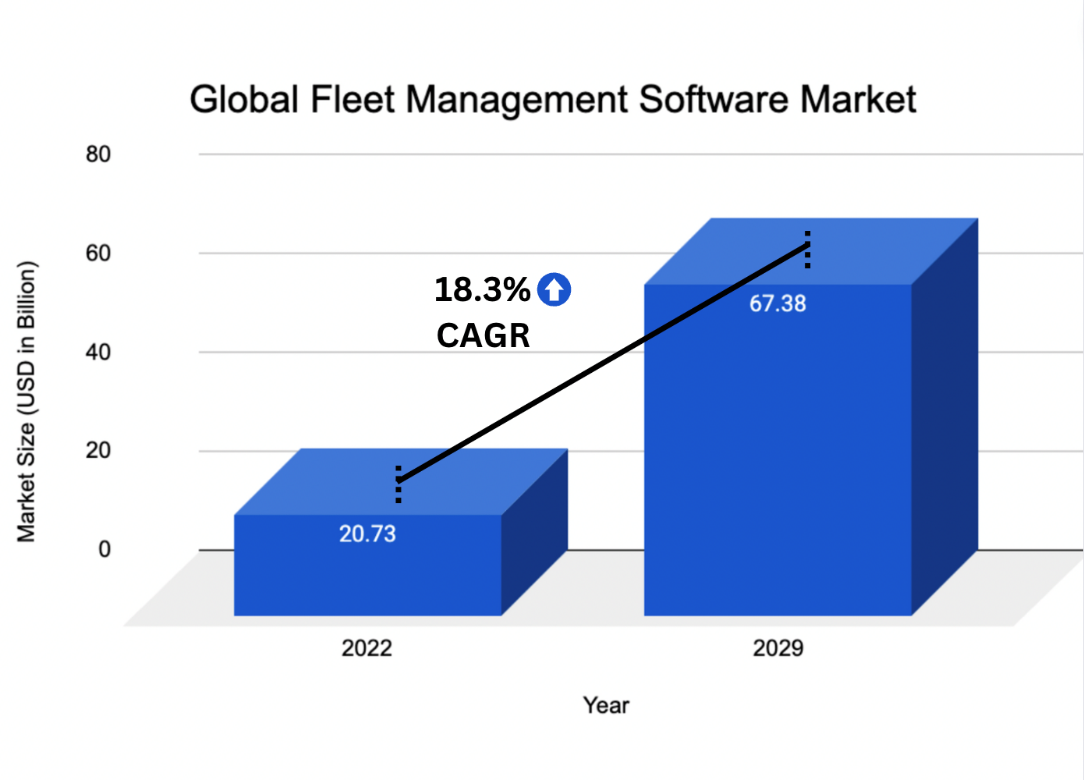
Global Adoption Is Growing: The fleet management software market is expected to grow at a CAGR of 18.3% a clear sign that businesses are investing in better operational control tools.
Service Visibility: Keeping Everyone Aligned
Fleet visibility is just one piece. The second part is making sure that the tasks assigned to your field teams are visible and updated.
With task tracking tools in place, teams get timely instructions and job details through a mobile app or dashboard. Managers, in turn, can see which tasks are active or pending and respond faster to any delay or field challenge.
This kind of system helps avoid confusion. Field teams aren’t chasing vague job notes, and managers aren’t left guessing who did what, when, and where. Managers, in turn, can see which tasks are active or pending and respond faster to any delay or field challenge.
Field Teams Want Clarity, Not Complexity
One common concern in field service is that “more software” equals “more complexity.” But when tracking and task management are set up well, they actually remove friction for field staff.
No more phone calls back to the office asking for addresses or task updates. The tools handle visibility so teams can focus on getting the job done.
At FieldMaster.ai, we offer unified fleet tracking and task visibility that powers real-time decisions, smarter dispatching, and end-to-end control across your field operations.
What B2B Businesses Are Doing Differently
A growing number of field-heavy businesses, whether in utilities, logistics, or facility management, are building these systems around their operations, not as an extra layer, but as the core framework.
They’re not only tracking where their vehicles are, but also using historical route data to refine dispatch and job allocation. They’re not just assigning tasks, they’re ensuring better coordination between team locations and job priorities, reducing delays across the board.
Final Thoughts
Field operations are unpredictable. But control doesn’t come from trying to prevent change it comes from being able to respond to it with clarity. That’s exactly what fleet tracking and task visibility make possible.
Whether it’s mileage, maintenance, fuel, or task load teams need all of it working in sync. For operations leaders, these aren’t just tools. They’re how you build a stable system that can flex with the realities of everyday field work without losing sight of what matters.
.png)

"Fieldmaster.ai transformed how we manage our operations across multiple sites. The accuracy we gained from field-first data collection eliminated costly mistakes and saved us months of reconciliation work."
Ready to transform operations
Discover how Fieldmaster helps companies like yours achieve field KPIs with precision and speed.

Stay ahead in the field
Get insights and strategies delivered to your inbox every week from Fieldmaster .
FAQs
Questions about field-first data and how Fieldmaster works
Field-first data is information captured at the source, where work actually happens. Instead of relying on reports compiled hours or days later, it's collected in real-time by workers on the ground. This approach eliminates the gaps and inaccuracies that come from office-based data collection.
FieldMaster AI's mobile app functions completely offline. Workers collect data without internet connectivity, and when the connection returns, all information syncs automatically. Nothing is lost, and operations continue uninterrupted regardless of network conditions.
Yes. Our native mobile app is built with zero-effort multilingual support. Workers of any ethnicity or language background become instantly familiar with the interface. There's no language barrier to adoption or understanding.
It means each user sees only the information relevant to their role. A supervisor has different access than a manager, who has different access than a field worker. This keeps operations organized and ensures people focus on what matters to them.
We've been in business since 2015, starting as field contractors ourselves. That experience shaped everything we built. We've added over $200 million in value to projects across the GCC by focusing on what actually works in the field.