.png)
How Contextual Escalation Replaces Time-Based Rules in Modern Operations
.png)
In the world of operations, not all delays are created equal. So why do alert systems often treat them the same? The outdated practice of escalating issues based on time if it's late, and sending an alert ignores the most important factor in decision-making: context.
This leads to stressed teams, missed opportunities, and constant firefighting. The solution isn’t faster escalation; it’s smarter escalation by understanding the situation.
Why Static, Time-Based Escalation Rules Fail
Static escalation rules are based on time triggers, making them predictable but ineffective in complex operations. While they provide consistency, they miss the critical factor: context.
- Rigidity in a Dynamic Environment: A 15-minute delay on a critical task is not the same as one on a routine task. Yet time-based rules escalate both equally, creating unnecessary noise and distractions.
- Escalation Fatigue: Alerts triggered for every minor issue overwhelm teams, desensitizing them and making it harder to focus on urgent, high-priority tasks.
- Misallocation of Resources: Unnecessary escalations pull skilled personnel away from higher-priority tasks, leaving them to address low-impact issues due to rigid rules.
Contextual Escalation: A Smarter, Impact-Driven Approach
Contextual escalation goes beyond fixed timers and uses real-time data to assess issues before escalating. This ensures that resources are directed where they are needed most, based on the actual situation.
- Impact-Based Prioritization: Not all delays are created equal. A contextual system asks: Which customer is affected? What’s the value of this service? A critical client project delay demands immediate attention, while an internal task delay may not require escalation.
- Data-Driven Decision Making: Contextual systems use real-time data, such as team workload and resource availability, to make informed escalation decisions.
- Dynamic Responses: Business conditions change constantly. A contextual system adapts to these changes by adjusting escalation criteria, such as re-routing tasks or modifying timelines, without manual intervention.
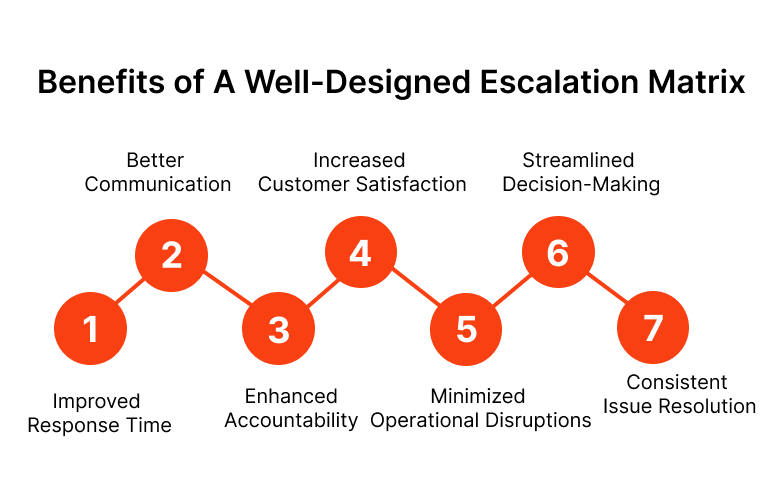
The Technology Enabling Contextual Escalation
Modern operations management platforms like Fieldmaster.ai provide the tools needed to implement contextual escalation, enabling real-time visibility and data-driven decision-making.
- Real-Time Visibility and Analytics: These platforms offer a live view of task progress, performance, and system health, ensuring escalations are based on real facts, not just time.
- Smart Decisioning: Fieldmaster.ai analyzes multiple data streams to predict issues, identify inefficiencies, and recommend actions, shifting operations from reactive to proactive.
- Customizable, Integrated Workflows: By connecting business functions like CRM, invoicing, and task management, systems ensure every escalation is based on the complete context of the issue.
Contextual Escalation in Action
- Telecommunications: A static rule escalates any outage after 10 minutes. A contextual system evaluates the impact: Is it affecting a single customer or a larger business corridor? It escalates based on severity, not just duration.
- Utilities: A delay in routine meter reading might be low priority, but a delay in restoring power to a hospital is critical. Contextual systems distinguish between these scenarios, escalating only high-priority issues.
- Service Delivery: A technician running 20 minutes behind? A contextual system checks their schedule, the priority of the next appointment, and external conditions to adjust. This minimizes disruption and notifies customers of any changes.
The Future of Escalation: Efficient, Contextual, and Adaptive
Relying on static escalation rules in today's fast-paced environment leads to inefficiency. Operational excellence demands a system that adapts to challenges dynamically. With Fieldmaster.ai, businesses can embrace contextual escalation, reducing noise, improving focus, and ensuring resources are allocated where they are needed most. By leveraging real-time data and intelligent decision-making, businesses can optimize workflows, address issues with agility, and enhance overall performance. Escalation isn’t about timing; it’s about context.
.png)

"Fieldmaster.ai transformed how we manage our operations across multiple sites. The accuracy we gained from field-first data collection eliminated costly mistakes and saved us months of reconciliation work."
Ready to transform operations
Discover how Fieldmaster helps companies like yours achieve field KPIs with precision and speed.

Stay ahead in the field
Get insights and strategies delivered to your inbox every week from Fieldmaster .
FAQs
Questions about field-first data and how Fieldmaster works
Field-first data is information captured at the source, where work actually happens. Instead of relying on reports compiled hours or days later, it's collected in real-time by workers on the ground. This approach eliminates the gaps and inaccuracies that come from office-based data collection.
FieldMaster AI's mobile app functions completely offline. Workers collect data without internet connectivity, and when the connection returns, all information syncs automatically. Nothing is lost, and operations continue uninterrupted regardless of network conditions.
Yes. Our native mobile app is built with zero-effort multilingual support. Workers of any ethnicity or language background become instantly familiar with the interface. There's no language barrier to adoption or understanding.
It means each user sees only the information relevant to their role. A supervisor has different access than a manager, who has different access than a field worker. This keeps operations organized and ensures people focus on what matters to them.
We've been in business since 2015, starting as field contractors ourselves. That experience shaped everything we built. We've added over $200 million in value to projects across the GCC by focusing on what actually works in the field.